


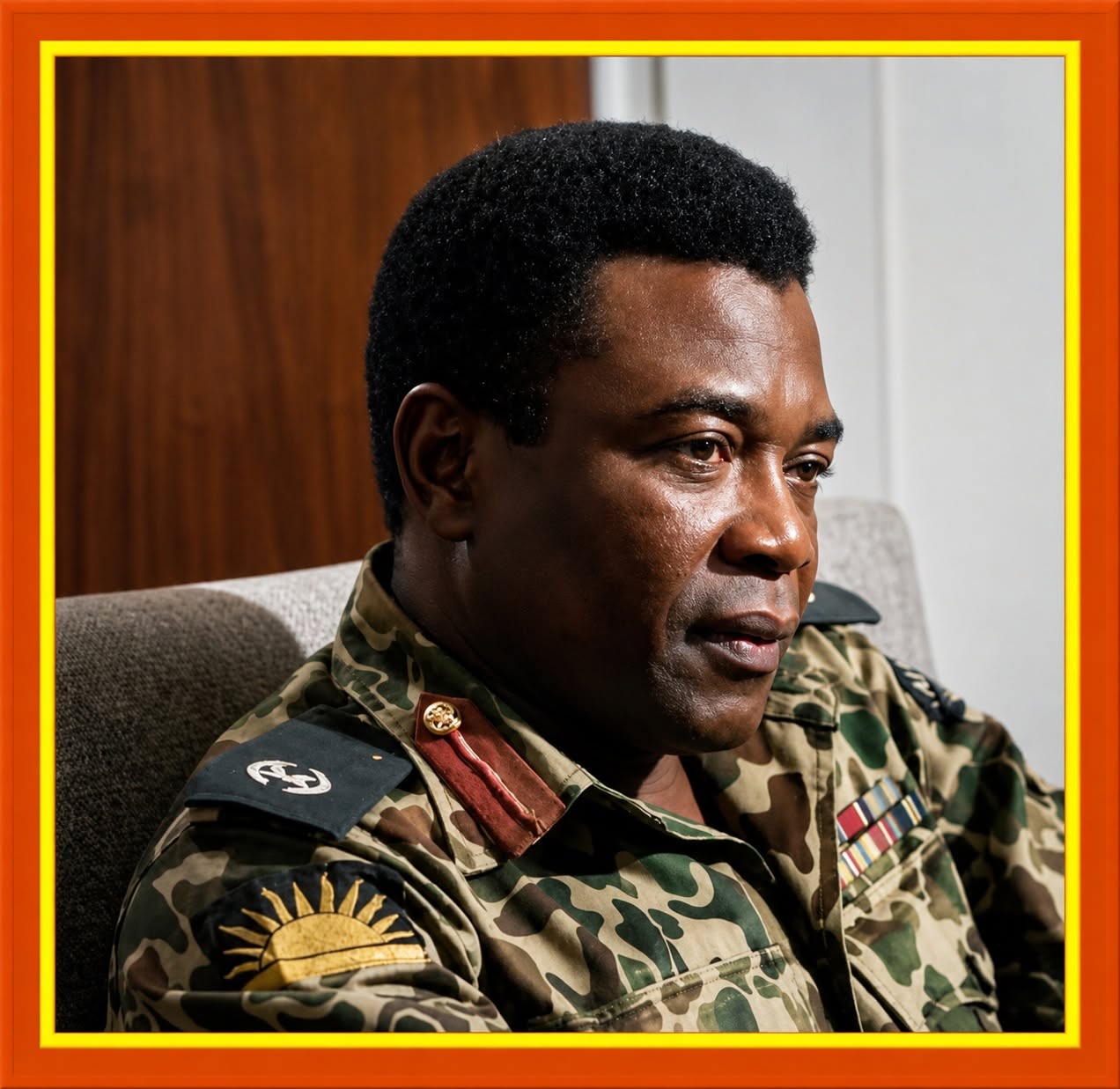
General Philip Efiong is remembered as the man who signed the papers that ended the Nigerian Civil War.
As the first Vice President and second, and final, Head of State of the Republic of Biafra, his decision to surrender on January 15, 1970 effectively brought the three-year conflict to a close.
But to reduce Efiong’s legacy to that single moment is to miss the complexity of a career soldier, an ethnic minority leader in a majority-driven secession, and a man who chose negotiation over annihilation.
From Eaton Hall To Biafra’s Final Days
Philip Efiong was one of the most highly trained senior officers in the pre-war Nigerian military.
– He enlisted in 1945 and received the Queen’s Commission in January 1956 after officer cadet training at Eaton Hall, Chester, England.
– He served with British forces on the Rhine in West Germany and deployed to the Republic of Congo in 1961 as part of the United Nations peacekeeping mission.
– He later became Nigeria’s first Director of Ordnance, overseeing weapons, ammunition, and logistics. Commissioned years before contemporaries like Olusegun Obasanjo, Yakubu Gowon, and Chukwuemeka Ojukwu, Efiong was a senior figure in the army hierarchy.
During the war, he served as Chief of General Staff of the Biafran Armed Forces under General Ojukwu.
On January 8, 1970, with Biafran defenses collapsing, Ojukwu fled to Ivory Coast. Efiong took over leadership. Seven days later, he made the call to end the war.
“The Republic of Biafra Ceases To Exist”
On January 12, Efiong addressed Biafrans on Radio Biafra. His message was blunt: the soldiers were overwhelmed and the cost in civilian lives was no longer sustainable.
Three days later, he flew to Dodan Barracks in Lagos to sign the Instrument of Surrender. General Yakubu Gowon, who had known Efiong before the split, received him warmly as an old colleague. The gesture helped ease a tense moment.
The surrender speech contained the now-famous line: _“The Republic of Biafra ceases to exist.”
But political observers note Efiong also delivered a warning. He told the federal government that if returning Biafrans were not treated with equity, fairness, and justice, the next generation would rise again.
That philosophy aligned with Gowon’s post-war policy of “No Victor, No Vanquished.” Yet for decades, Efiong and other Biafran officers faced economic and political marginalization, including the withholding of military pensions until a partial presidential pardon in 2000.
A Minority Leader In A Majority War
Efiong’s background set him apart. He was an Ibibio man from Ibiono Ibom, in what is now Akwa Ibom State. Biafra was largely driven by the Igbo, and minority groups in the Niger Delta and Eastern Region were often viewed with suspicion by both sides.
Efiong’s professionalism helped him navigate those tensions. He became a symbol of Biafra as a multi-ethnic coalition, not solely an Igbo project.
Courage ran in the family. His mother was a participant in the 1929 Aba Women’s War against colonial taxation.
His private life also broke convention. While studying in England, he married Judith Effiong, a Hungarian-born woman — a rare interracial union for a senior African officer in the 1950s. Judith stood with him through bombings and displacement.
Some records also reference Lady Josephine Effiong, who passed away at 89. She was born to a Welsh father and an Igbo mother from Ukwuani in Delta State, and met Efiong in 1956 while teaching in Zaria.
Legacy Beyond The Surrender
After the war, Efiong lived quietly in Nigeria. His son, Professor Philip Efiong Jr., is a scholar and drama professor at Michigan State University. In his book, Nigeria’s Uncivil War: Memories of a Biafran Child_, he documents the conflict and challenges what he calls decades of efforts to erase it from school curricula.
General Philip Efiong died in 2001. He is remembered less for defeat and more for a calculated decision made under impossible conditions: to surrender, in order to stop starvation, blockade, and further bloodshed.
His life reflects the tensions of leading as a minority in a majoritarian conflict, the burden of command at a war’s end, and the personal cost of a war that Nigeria is still reconciling with today.