

Ibrahim Babangida and Maryam Babangida: The Military Ruler and Nigeria’s Most Influential First Lady
The story of a couple whose years in power left a lasting mark on Nigeria’s political and social history.
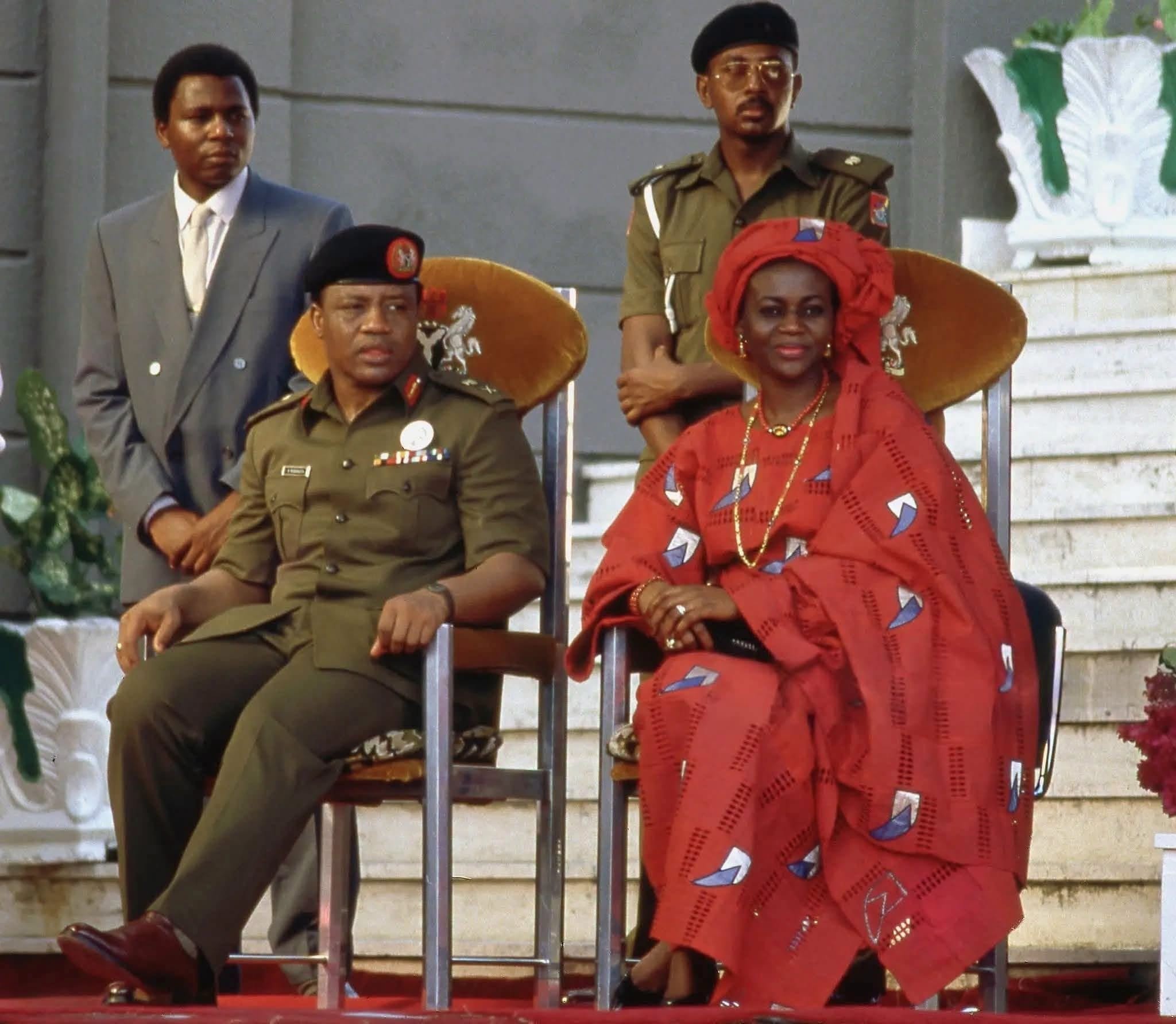
Among the most recognisable couples in Nigeria’s political history are General Ibrahim Badamasi Babangida and his wife, Maryam Babangida. During Babangida’s eight-year military administration, from 27 August 1985 to 26 August 1993, the couple became symbols of power, influence and national attention. While General Babangida shaped Nigeria’s political direction, Maryam Babangida redefined the role of the First Lady, making it one of the most visible and influential positions in the country.
General Ibrahim Badamasi Babangida, popularly known by his initials IBB or the nickname “Maradona”, was born on 17 August 1941 in Minna, Niger State. A career military officer, he rose through the ranks of the Nigerian Army and became Nigeria’s military Head of State after overthrowing the government of General Muhammadu Buhari in a bloodless coup on 27 August 1985.
His administration introduced several economic and political reforms, including the Structural Adjustment Programme (SAP), banking reforms and an ambitious transition programme intended to return Nigeria to civilian rule. While some of these policies reshaped Nigeria’s economy, others generated widespread criticism because of their social and economic impact.
Standing beside him throughout his years in office was Maryam Babangida, born Maryam Okogwu on 1 November 1948 in Asaba, now in Delta State. She married Ibrahim Babangida in September 1969, and together they had four children.
Maryam Babangida transformed the office of the First Lady into a platform for national development. Before her tenure, the wives of Nigerian leaders generally maintained low public profiles. Maryam changed that by actively championing programmes aimed at improving the lives of women and rural communities.
In 1987, she launched the Better Life Programme for Rural Women, an initiative designed to improve the economic and social conditions of women across Nigeria. The programme promoted literacy, healthcare, vocational training, cooperative societies and agricultural development for rural women. It attracted national and international recognition and inspired similar initiatives in other African countries.
Because of her visibility, charisma and developmental projects, Maryam Babangida is widely regarded by historians and political commentators as Nigeria’s most influential First Lady. Her tenure set a precedent for subsequent First Ladies, many of whom adopted similar social intervention programmes.
However, General Babangida’s administration remains one of the most debated periods in Nigeria’s political history. The defining moment came with the 12 June 1993 presidential election, widely regarded as Nigeria’s freest and fairest election. The election was believed to have been won by Chief Moshood Kashimawo Olawale (M.K.O.) Abiola but was annulled by Babangida’s military government before the final declaration of the results.
The annulment sparked nationwide protests, political instability and international condemnation. It remains one of the most controversial decisions in Nigeria’s history. In his memoir, A Journey in Service, published in 2025, Babangida acknowledged that M.K.O. Abiola won the election and accepted responsibility for the annulment, a subject that had remained controversial for more than three decades.
Following the political crisis, Babangida stepped aside on 26 August 1993, handing over power to the Interim National Government led by Ernest Shonekan.
After leaving office, Ibrahim and Maryam Babangida remained married until Maryam’s death. She passed away on 27 December 2009 at the University of California, Los Angeles (UCLA) Medical Center in the United States after a prolonged battle with ovarian cancer. She was 61 years old. Her death was widely mourned across Nigeria, with many remembering her contributions to women’s development and her impact on the office of the First Lady.
Today, photographs of Ibrahim and Maryam Babangida continue to evoke memories of one of Nigeria’s most influential political partnerships. Their legacy remains a mixture of significant achievements, enduring social programmes and controversial political decisions that continue to shape discussions about Nigeria’s history.
IBB & Maryam: Nigeria’s Most Powerful Political Couple


RELATED ARTICLES