Home Blog Page 3

Hisbah Bans Movie Downloads, Distribution On Phones In Kano Over Morality Concerns

_Board says move is to protect youths and uphold Islamic values_

The Kano State Hisbah Board has banned the downloading and distribution of movies on mobile phones across all 44 local government areas of the state.

The directive, announced on Thursday by the board’s Deputy Commander General, Dr. Mujahid Aminuddeen, is aimed at protecting public morality and upholding Islamic values.

According to Aminuddeen, the decision followed complaints that some phone operators were using mobile devices to circulate pornographic films and other video content considered offensive to Islamic teachings and Kano’s cultural values.

He said the rising consumption of indecent films among youths has been linked to increasing cases of moral decadence in the state.

The Hisbah official said personnel have been deployed to monitor compliance through routine patrols and enforcement operations across Kano.

He warned that anyone found violating the directive would face legal action in accordance with Kano State laws.

Aminuddeen also urged those affected by the ban to seek other lawful means of earning a living, adding that the measure is intended to shield young people from harmful content and preserve societal values.

The Kano State Hisbah Board is responsible for enforcing Sharia-related regulations in the state. Over the years, it has introduced several measures aimed at promoting Islamic values and restricting activities and content deemed contrary to the state’s religious and cultural norms.

2027 Elections: Appeal Court Gives INEC Green Light, Voids High Court Judgment

…Sets aside Federal High Court judgment that nullified them_

The Court of Appeal, Abuja Division, has upheld the 2027 election guidelines issued by the Independent National Electoral Commission, INEC, ruling that they are valid for use.

The appellate court on Thursday set aside the May 20 judgment of the Federal High Court in Abuja which had nullified the guidelines and stopped their implementation.

Delivering a unanimous judgment, the court held that the Youth Party, YP, which challenged the guidelines, lacked the legal right to institute the case.

In the lead judgment written by Justice Adebukola Banjoko and read by Justice Okon Abang, the court said the YP failed to show how the guidelines affected it or its members in conducting primaries and submitting candidates for the 2027 elections.

The panel of three justices agreed that the Federal High Court judge, Justice Mohammed Garba Umar, erred when he nullified the guidelines on the ground that they violated the Electoral Act, 2026. The Appeal Court described the decision as a miscarriage of justice.

INEC had appealed the ruling through its counsel, Alex Izinyon, SAN. The commission argued that the lower court ignored key legal issues and denied fair hearing.

Izinyon told the court that the Electoral Act, 2026 only requires political parties to notify INEC 21 days before primaries and to submit candidates’ names not later than 120 days to the general election. He said the Act does not empower INEC to fix a specific date for parties to hold primaries.

With the Appeal Court’s decision, INEC is now free to implement its 2027 election guidelines.

From Hospital Bed To NYU: How Aya Osman Beat Cancer At 12 And Graduated With A 4.77 GPA

0

..Now cancer-free, she earned a full scholarship to study biology on her path to neurology_

Aya Osman’s story is one of quiet strength.

Diagnosed with cancer at just 12 years old after discovering a lump in her neck, Aya spent years moving between hospital rooms and chemotherapy sessions that often kept her admitted for days.

But even in the middle of treatment, she refused to let her education slip. With the support of her mother and her medical team, Aya continued her studies from her hospital bed.

Despite the pain, the fatigue, and the uncertainty, Aya stayed focused. She showed up for classes virtually when she could, completed assignments between treatments, and kept her eyes on a goal bigger than her illness.

That determination paid off. Aya graduated high school with top honors and a remarkable 4.77 GPA.

Her resilience caught the attention of scholarship committees. She was awarded a full scholarship to study biology at *New York University*, bringing her one step closer to her dream of becoming a neurologist.

Today, Aya is cancer-free.

For her, the journey was never about just surviving. It was about showing up consistently, even on the hardest days.

“Her story is a powerful reminder that determination and consistency can carry you through even the toughest moments,” those close to her say.

As she begins her studies at NYU, Aya is turning a chapter defined by hospitals into one defined by hope — and by the future she fought so hard to claim.

Man, 49, Hacked To Death In Anambra Land Dispute As Umuenu Community Protests

…Protesters beg Soludo to intervene, say case is already in court_

A 49-year-old man, Humphrey Obi, has been hacked to death over an alleged land dispute between Umuenu and Enugwu quarters of Umuawulu community in Awka South Local Government Area of Anambra State.

Obi, a father of four and former Chairman of Umuenu Village, was reportedly attacked by suspected “land grabbers” from Enugwu quarters while farming on the disputed land.

His death was announced on Wednesday, July 15, 2026, during a peaceful protest held at the Umuenu Town Hall.

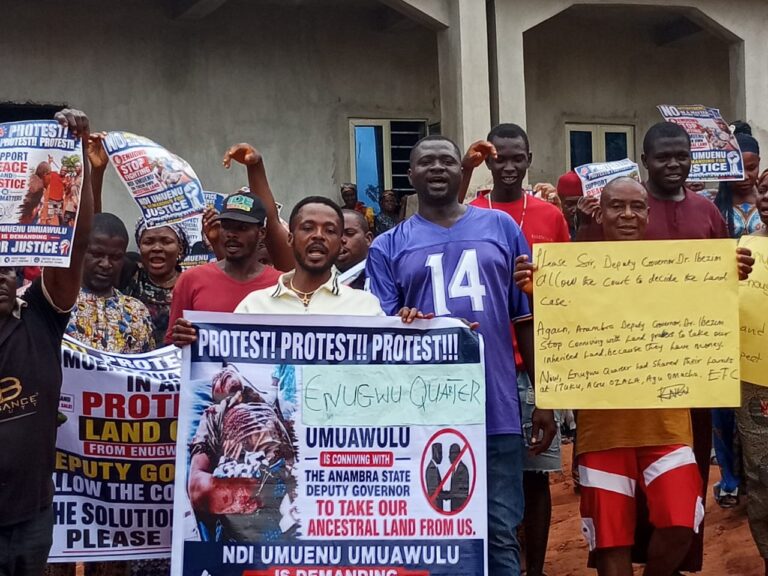
Led by the President-General of Umuenu quarters, Comrade Benneth Mbolu*, protesters marched through the area carrying placards with inscriptions such as:
“Enugwu quarters leave our ancestral land alone”, “Umuenu is protesting against land grabbers”, “Anambra Deputy Governor, this is a possession matter and not boundary issue”,_and “Enugwu stop fighting Ndi-Umuenu of their ancestral land.”

Addressing journalists after the protest, Mbolu appealed to Governor Chukwuma Charles Soludo to urgently stop members of Enugwu quarters from entering the disputed land to prevent further killings.

He said the land matter is already before the High Court Awka, Suit No: A/82/2021.

“We are appealing to our Solution Governor, Prof. Chukwuma Charles Soludo not to allow any influence from any quarters to cede our ancestral land to Enugwu quarters as they are already stopped by the courts,” Mbolu said.

He also urged the State Deputy Governor, Dr. Onyedikachukwu Ibezim, who heads the Anambra State Boundary Commission, not to be biased in handling the matter, insisting it is a case of ownership, not boundary.

“The land tussle has claimed the life of our former Chairman, late Humphrey Obi, who was the only child of his aged parents. There is serious tension in our quarters now. We no longer go to farm and we no longer sleep with our two eyes closed because of fear of the unknown,” he added.

Mbolu alleged that Obi was “brutally macheted to death by land grabbers from Enugwu quarters” and called for total justice for the slain leader.

A 96-year-old elder of the community, Stephen Okechukwu Okoye, also pleaded with Governor Soludo and other stakeholders to intervene urgently to prevent a breakdown of law and order in the community.

The widow of the deceased, Mrs. Nkechi Obi, wept as she appealed to the state government to fish out those behind her husband’s death.

She lamented that the incident has plunged her four children into hardship and disrupted their education.

“We are law-abiding citizens of Nigeria. We want our land and total justice for our slain leader,” Mbolu further stated.

Umuenu community said they are not agitating for a boundary adjustment with Enugwu, but demanding that the court process be allowed to run its full course and that their ancestral land be left untouched until judgment is delivered.

Police authorities in Anambra are yet to issue an official statement on the incident as of press time.

2 Arrested As Police Foil N10m Ransom Kidnap Plot

0

…Victim rescued unhurt 8 days after abduction, N1m ransom recovered

The Oyo State Police Command has rescued a 5-year-old girl, Fikayo Gbemiga, and arrested two suspected kidnappers eight days after she was abducted from her home in Ibadan.

The suspects, Adegboye Seyi Sunday, 37, and Adegboye Elijah Adefemi, 25, were arrested on Friday, July 11, 2026 at their hideout in the Mojoyin Molade area of Iwo Road, Ibadan.

The Command’s spokesperson, DSP Ayanlade Olayinka, said in a statement on Wednesday, July 15, that the suspects unlawfully gained access to the minor’s residence in the Iyana Offa area of Ibadan on July 3, 2026 and abducted her.

They later demanded a ransom of N10 million from the victim’s family.

According to the police, the suspects had already collected N1 million as part payment on July 8, 2026 in Gbongan, Osun State.

“Operatives of the Command Anti-Kidnapping Squad leveraged technology and other investigative tools to trace and identify the suspects’ hideout,” the PPRO stated.

Acting on credible intelligence, operatives stormed the hideout at about 10:35 p.m. on July 11. The victim was rescued unhurt and immediately taken for medical care. Both suspects were arrested before they could relocate the child.

The police said preliminary investigations revealed the two men acted together in the crime. The suspects are currently cooperating with investigators.

Efforts are ongoing to recover the ransom already collected and apprehend other members of the syndicate still at large.

The Commissioner of Police, CP Abimbola Ayodeji Olugbenga, commended the operatives for the successful operation. He reaffirmed the Command’s commitment to rid Oyo State of kidnapping through intelligence-led policing.

He also urged residents to remain vigilant and provide timely information to the police, assuring that all intelligence will be treated with confidentiality.

1 Killed As Suspected Gunmen Attack Plateau State

Troops of Operation Enduring Peace have launched a manhunt for suspected gunmen after the killing of a community sentry in Gwom Village, Rim District of Riyom Local Government Area, Plateau State.

The attack occurred at about 10:00 p.m. on Tuesday, July 14, 2026.

Security sources said troops of Sector 6, Operation SAFE HAVEN, responded to a distress call about an attack on the village.

On arrival, they found the lifeless body of the victim, identified as Markus Musa. He was reportedly on sentry duty when the assailants attacked and killed him.

A search of the scene led to the recovery of two empty cases of 7.62mm NATO ammunition and two disintegrated metallic ammunition links. The findings suggest high-calibre weapons were used in the attack.

According to sources, members of the community evacuated the deceased’s body for burial in line with local customs.

Troops have since commenced tracking operations to apprehend the perpetrators. Security patrols have also been intensified in Gwom and surrounding communities to prevent further attacks and reassure residents.

Operation SAFE HAVEN, also known as Operation Enduring Peace, is the military task force saddled with maintaining security in Plateau, Bauchi, and parts of Kaduna States.

Xenophobia: Final Batch Of 308 Nigerians Returns From South Africa

…1,459 citizens repatriated in total following anti-immigrant violence

The Federal Government has concluded the voluntary evacuation of Nigerians from South Africa with the arrival of the final batch of returnees on Wednesday.

Air Peace airlifted 308 Nigerians aboard its Boeing 777-200 aircraft from Johannesburg to Lagos, bringing an end to the evacuation exercise launched in response to recent anti-immigrant violence in parts of South Africa.

According to the airline, Air Peace conducted five evacuation missions and safely returned 1,393 Nigerians.

Another 66 citizens were evacuated by ValueJet under the same programme.

In total, 1,459 Nigerians have now been repatriated under the Federal Government’s evacuation initiative.

The evacuation followed a wave of xenophobic attacks targeting foreign nationals in some South African provinces. The Federal Government, in collaboration with Nigerian missions in South Africa and local airlines, organized voluntary return flights for citizens who wished to come home.

Officials said arrangements have been made to receive the returnees and provide them with necessary support on arrival in Lagos.

Sierra Leone Drops Treason Charges Against Ex-President Koroma, Clearing Path For Return From Nigeria

Sierra Leone’s government has discontinued the treason trial of former President Ernest Bai Koroma, clearing the way for his return home after more than two years in exile in Nigeria.

In a statement dated July 14, 2026, Koroma confirmed he had been notified by the Attorney-General and Minister of Justice that criminal proceedings against him had been dropped “in accordance with the laws of the Republic of Sierra Leone.”

The charges were filed by the government of President Julius Maada Bio following a disputed 2023 election and a reported military coup attempt in November 2023. Koroma denied any involvement.

As part of ECOWAS-led mediation, Nigeria granted Koroma refuge in January 2024 under a court-sanctioned medical stay.

Koroma expressed gratitude to regional leaders for their intervention.

“I am especially indebted to His Excellency President Bola Ahmed Tinubu, the government and people of Nigeria… throughout the process,” he said.

He also thanked the ECOWAS Authority of Heads of State, the President of the ECOWAS Commission, former Heads of State, and “President Maada Bio and all those whose efforts guided by the constitution and the rule of law have contributed to bringing this matter to its conclusion.”

Diplomatic sources said with the discontinuation of the trial, Koroma is now free to return to Sierra Leone at any time.

President Bio had earlier said the court’s decision demonstrated his government’s “commitment to justice and goodwill,” and insisted the trial was not a political witch-hunt.

The development comes as Sierra Leone hosts ECOWAS statutory meetings in Freetown, ahead of a regional summit on July 19 where a new ECOWAS Commission leadership and Authority Chair are expected to emerge.

But analysts say Sierra Leone’s democracy remains fragile. According to the BTI 2026 Country Report, the “prolonged political stalemate following the 2023 elections” has weakened democratic institutions.

The report noted that “this government lacks legitimacy in the eyes of opposition members, their supporters and some external observers,” and called for full implementation of the Cross-Party Committee’s recommendations on party financing, the Electoral Commission, and use of state resources in campaigns.

It also urged an independent investigation into the August 2020 violent protests and the alleged November 2023 coup attempt.

President Bio’s one-year tenure as ECOWAS Authority Chair ends at the Freetown summit and is expected to face scrutiny over the bloc’s response to coups in the region.

Four ECOWAS member states are currently under military rule, while three others have withdrawn to form the Alliance of Sahel States, AES.

The crisis in Guinea-Bissau, where former President Umaro Sissoco Embaló organized a self-coup in November 2025, has become what diplomatic sources call “a litmus test” for ECOWAS.

Observers say the regional body is divided between political leaders and technocrats at the Commission over whether to bar Embaló and junta officials from future elections.

“Allowing Embaló to profit from a self-coup is not only a blatant violation of the ECOWAS protocol against unconstitutional change of government, but it will also amount to setting a dangerous precedent,” a source said.

Victor Banjo: One Man’s Revolutionary Is Another Man’s Rebel, By Aoiri Obaigbo

Enugu in early August already carried the particular tension of a capital at war—checkpoints going up overnight, radios crackling with half-confirmed rumours, the air thick with the smell of diesel and impending consequence. Reports of the capture of Bonny and its oil terminals weren’t shared with the citizens, but there was an edginess in the air, mingling with songs of optimistic patriotism. It was into this city, on the 6th, that Wole Soyinka came, having slipped out of the West with no story that would survive scrutiny. He was not there to admire the capital’s nerve. He didn’t come to persuade Ojukwu not to secede, though he would prefer the referendum route. He made a point to see his friend, Christopher Okigbo, unknown to both of them, for the last time. Perhaps, he shared a cigar, tea, or coffee with Ojukwu over whatever chat masked his true mission to Enugu. There was one consequential conversation to have, and the man waiting for him was Victor Banjo.

They were both patriotic intellectual vanguardist of University College Ibadan circuit, shaped by the same lofty, fervent desire for liberty. And here they were, on the eve of an invasion the world did not yet know was coming, quietly deciding to turn that invasion into something else entirely.

Banjo would have laid it out with a soldier’s economy. In three days he would move into the Midwest—that much was already fixed, already loaded into the machinery of the war. But the Midwest was never the point. It was merely a leverage. His course mate, David Ejoor was the governor of the youngest and least armed region. Beyond it lay the West, Awolowo’s uneasy territory, full of men who despised Gowon’s Northern-dominated federal government but recoiled just as violently from Biafran tanks in their streets. It was in that narrow crack between two fears that Banjo meant to work—and Soyinka’s task was to go back and prise open a corridor through the Garrison Commander, Olusegun Obasanjo. When the moment came, this assembled weight would move on Lagos and Enugu together, and Gowon and Ojukwu would both be swept from the board, replaced by something Soyinka and his fellow travellers had been imagining, in one form or another, for years.

Soyinka left Enugu on the 7th carrying that plan inside him like something ready to detonate, and by the 8th he was back in Ibadan, moving through his old college city with the strange, hunted alertness of a man who has just agreed to become a traitor to at least one side. On the 9th, exactly as promised, Banjo’s forces took the Midwest, and the whole conspiracy stopped being a conversation and became a living thing, with a few surprises. He had no idea, Ojukwu had asked people under his command to unalive David Ejoor behind his back. He went on the radio to preach liberation, but Ojukwu imposed Okokwo on the citizens. His sermon on radio wasn’t adding up. Time was ticking. Soyinka kept pace with it. On the 11th he met Olusegun Obasanjo in Ibadan, passing along Banjo’s message—the shape of the rendezvous, the terms of the mutiny, whatever precise coordinates a plot like this needs to survive its own infancy.

It survived two more days. On the 13th of August, Soyinka was arrested, and the solitary confinement that followed would hold him for the rest of the war—the one man capable of animating the Western half of the plan, taken off the board just as it needed him most. From his own point of view, Obasanjo was a calculating man.

What was left, after that, was Banjo sitting at Ore with an invasion that had lost its luckier half. The weeks that followed have gone down in the history as hesitation, as a commander’s failure of nerve at the one moment nerve mattered most. But it was not hesitation. It was a man listening for a signal that was never going to come, because the messenger was already in a federal cell, and the West was happy to have Awolowo managing the purse of the war.

Meanwhile in Enugu, Ojukwu’s own intelligence was bringing him a colder story—that his commander had been meeting those dreaded intellectuals, courting Third Force sympathisers, perhaps building something with Biafran soldiers that had nothing to do with Biafra’s military objectives at all. Suspicion, once planted, does not need much silence to grow into certainty.

On the 20th of September, federal troops behind the most reckless commander finally broke the line at Ore, and Banjo was recalled to Enugu that same day and arrested. Two days later, on the 22nd, he was executed. What had begun as a few men whispering in a safe space in Enugu in early August ended, in that same city—on a stake at an execution ground.

With Soyinka writing his exculpatory memoir in Kaduna, and his like minds lying in unmarked graves, the radical network of brilliant minds had run out of time. What broke the hearts of the Survivors the most was the death in battle of their finest poet—Christopher Okigbo.

Whoever is romancing the notion that the third force had a chance in hell of achieving peace probably thinks the Mid-West invasion was the beginning of the civil war.

But it was actually a desperate response to a landmark federal military success on July 25, 1967. The Bonny Landing is the most significant turning point of the avoidable war. Nine war ships were deployed in the first fully orchestrated amphibious assault ever undertaken by an independent African nation, which set the stage for the naval and economic encirclement of Biafra. It put an stop to Shell BP’s temptation to pay royalty to Enugu.

When Captain Soroh, assisted by James Rowe, helped Benjamin Adekunle to put the boots of his marine force on the beach of Bonny, the action transferred £150 million assets under the control of Gowon, and convinced Britain that they could bank on the federal government of Nigeria. It also sealed the can on Biafra.

This is why the troops under Banjo’s command formed three prongs—one heading to Agenebode with access to a strategic part of the seaward River Niger; one heading to Warri and Escravos, grabbing Ughelli; and the arrow head surging towards Lagos, with Benin as its centre of gravity.

At this point, Biafra had a clear advantage in the air and was terrifying targets in Kaduna and Apapa. Frustrated by the British, stalling, waiting to be sure on which horse to place their bet, Gowon had turned to Russia for fighter jets.

In effect, the war these militant intellectuals were trying to wrest from the furnace was a war in full swing.

The reality on the ground is why I make bold to say that Obasanjo saved the West from becoming the main theatre of war. And, the third force was an exercise in recklessly dangerous naivety.

Bandits Abduct School Principal, NECO Official, 4 Students In Kogi During Examination

Gunmen suspected to be bandits have abducted the principal of Government Secondary School, GSS, Opada-Olowa, a National Examinations Council, NECO, ad hoc staff, and four students in Dekina Local Government Area of Kogi State.

The attack occurred at about 5:25 p.m. on Tuesday, July 14, 2026, while students were writing their examinations.

How The Attack Happened

According to eyewitnesses, the armed assailants stormed the school premises during an ongoing exam, shooting indiscriminately and causing panic.

A community leader, Sunday Alkali, said residents were relaxing outside when the gunmen first appeared and retreated, before returning to open fire.

“The gunmen seemed surprised to see many people outside at that time of the day and initially retreated. They later returned, shooting indiscriminately, forcing everyone to flee for safety,” Alkali said.

Another resident said it was only after the gunfire stopped that they discovered the school had been attacked.

“We initially did not know what the gunmen were after. After the shooting stopped, some of us went to the school and found examination papers scattered across classrooms. There were no students or school officials in sight,” the resident said.

Victims Identified

The Kogi State Police Command confirmed that six persons were abducted:

1. Mr. Nyada Daniel – School Principal

2. Mr. Solomon Audu – NECO Ad Hoc Staff/Supervisor

3. Four Students – Writing Literature in English

Security sources said one of the abducted students has been rescued, while efforts are ongoing to free the remaining five.

Residents noted that the number of abducted students could have been higher, but only a limited number of candidates were writing Literature in English at the time.

A combined team of the Police, Army, vigilantes, and local hunters has launched a search-and-rescue operation and bush-combing around the area to track the kidnappers.

Spokesperson of the Kogi Police Command, ASP Saliu Oyiza Afusat, confirmed the incident and said security agencies are on the trail of the assailants.

“The Commissioner of Police, CP Naziru Bello Kankarofi, the Brigade Commander and the State Security Adviser to the Governor are currently en route to the scene for an on-the-spot assessment,” she said.

A resident, who pleaded anonymity, said: “As I speak with you, soldiers, policemen, vigilantes and hunters are combing the surrounding forests in search of the kidnappers.”


Alkali also alleged that the abductors have contacted relatives of the victims, demanding ransom for their release.

“At least four families have received calls from the abductors demanding huge sums of money for the victims’ freedom,” he alleged.

The attack is the latest in a series of school abductions in North Central Nigeria, raising fresh concerns over the safety of students writing public examinations.

Senate Donates ₦50 Million To Families Of Officers, Teachers Killed In Oorire Kidnap Rescue

0

The Senate has approved a ₦50 million donation to the families of five Nigerians who died during the rescue of schoolchildren abducted in Oorire, Oyo State.

The children and their teachers spent 56 days in captivity before security operatives secured their release.

Announcing the donation during plenary on Wednesday, Senate President Godswill Akpabio said lawmakers unanimously agreed to give ₦10 million to each of the bereaved families.

Akpabio recalled that the Senate had a day earlier commended President Bola Tinubu and security agencies for the successful rescue operation.

He praised the efforts of the Chief of Army Staff, the Director-General of the Department of State Services, DSS, the Inspector-General of Police, the Minister of Defence, and President Tinubu, whom he described as the Commander-in-Chief who led the operation.

According to Akpabio, while the victims were rescued alive, the operation came at a heavy cost.

The Senate President named the fallen security personnel as:

1. Lieutenant F. A. Isaac – Nigerian Army

2. Private Silas Musa – 81 Battalion, Nigerian Army

3. Sergeant Abena John Jerome – Nigeria Police Force

He also named the two slain teachers as Deacon John Olaleye and Michael Oyedokun.

Akpabio said both teachers were murdered while in captivity with the abducted children. Oyedokun was reportedly beheaded by the kidnappers before the rescue.

The Senate President explained that the ₦10 million for each family is to support the children and dependants left behind by the deceased.

He put the proposal to a voice vote, and it received overwhelming support from senators.

Akpabio subsequently directed the Senate leadership to present the cheques to the affected families on behalf of the upper chamber.

He expressed hope that the financial support, though symbolic, would provide some relief to the bereaved families and reaffirm the Senate’s appreciation for the sacrifices made.

The Oorire schoolchildren were abducted 56 days ago and rescued last week in a joint operation by the Army, Police, and DSS.

Ex-NAPTIP DG Alleges Women Use Steroids To Fake Pregnancies, Buy Babies

0

Former NAPTIP Director-General, Julie Okah-Donli, has alleged that some women use steroids to fake pregnancy and later buy babies to deceive their husbands.

In a viral clip from _Kaa Truths Podcast_ shared on July 14, Okah-Donli said the women are injected with steroids to cause bloating and a large stomach.

“They look pregnant, but they are not pregnant,” she said. “When their husbands are around, they pretend to have morning sickness.”

She alleged that the babies are presented to the husbands after they travel or are sent on errands. Some women, she claimed, even undergo fake CS procedures “to make it look like they had a CS.”

Okah-Donli also called for maternity DNA tests during paternity disputes, saying many cases may involve purchased babies rather than infidelity.

“Most of them say they have twins, triplets, quadruplets because it’s easier for them to just buy them once and for all,” she added.

Mother, Daughter Among 4 Killed In Gunmen Attack On Kaduna Community

0

A mother and her daughter were among four people killed when suspected gunmen attacked Katul Crossing Community in Kachia Local Government Area of Kaduna State on Monday night, July 13, 2026.

Residents said the attackers stormed the community around 8:00pm, opening fire indiscriminately.

The daughter was shot dead at the scene. Her mother sustained critical gunshot injuries and was rushed to hospital, but later died from her wounds.

Two other residents were also reportedly killed in the attack. Their bodies are being kept at a mortuary pending burial arrangements by their families.

As of press time, security authorities had not released an official statement on the incident.

The attack has thrown Katul Crossing and surrounding communities into mourning, with residents calling for increased security presence in the area.

Police in Kaduna are yet to confirm the casualty figures or provide updates on ongoing investigations.

BREAKING: ‘Fake’ PFIPC DG, Adeniyi Adeyemi Arrested Hours After Court Warrant

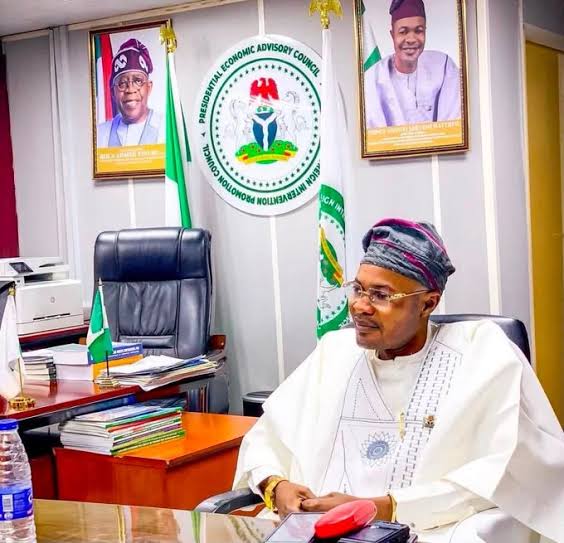
Operatives have arrested Adeniyi Adeyemi, the self-styled Director-General of the non-existent Presidential Foreign Intervention Promotion Council, PFIPC.

The arrest came hours after Justice Mohammed Umar of the Federal High Court in Abuja issued a bench warrant for his arrest on Tuesday.

Adeyemi is facing an 8-count charge bordering on forgery, impersonation, and related offences instituted by the Nigeria Police Force. The court ordered the warrant after he failed to appear for arraignment on multiple occasions.

The Presidency has previously disowned PFIPC, warning that the council does not exist.

BREAKING: Court Orders Arrest Of ‘Fake’ DG Adeniyi Adeyemi Over Forgery, Impersonation  

The Federal High Court in Abuja has issued a warrant for the arrest of Adeniyi Adeyemi, who paraded himself as the Director-General of a non-existent agency, the “Presidential Foreign Intervention Promotion Council” (PFIPC).

Justice Mohammed Umar issued the bench warrant on Tuesday after Adeyemi failed to appear in court to take his plea in an 8-count criminal case filed by the Nigeria Police Force.

Defendant Skips Court 5 Times

Prosecuting counsel, Wisdom Madaki, told the court this was the fifth time Adeyemi had failed to attend trial. He said all previous adjournments were at the instance of the defendant.

Citing Section 349 of the Administration of Criminal Justice Act, 2015, Madaki urged the court to order Adeyemi’s arrest and production in court.

Adeyemi’s lawyer, Genesis Francis, opposed the application. He told the court his client’s life was under threat and referenced an open letter to President Bola Tinubu that had gone viral. Francis said the case had “assumed national significance.”

Justice Umar dismissed the defense argument and granted the prosecution’s request.

“The defendant showed up only once since this case commenced on December 4, 2025. He has failed to show up for more than four consecutive adjournments. For this reason, I will accede to the application of the prosecution and issue a bench warrant against the defendant,” the judge ruled.

The court ordered that the warrant be served on Adeyemi and that he be produced in court on September 30, 2026 for arraignment.

The Allegations

Adeyemi, 38, is charged alongside two others — Femi and Anu, both now at large — with forgery, impersonation, and other offences.

Prosecutors allege that Adeyemi:

– Secured office space on the 2nd Floor of the Federal Secretariat, Abuja, for a non-existent council

– Opened multiple bank accounts in the name of PFIPC

– Secured a ₦1.3 billion allocation in the 2026 budget despite being publicly disowned by the Presidency

– Forged documents including appointment letters purportedly signed by Chief of Staff Femi Gbajabiamila, presidential letterhead, and requests for land, offices, and staff accounts across 36 states

He was arrested by the DSS in June 2026 at Nnamdi Azikiwe International Airport, Abuja.

The 8 Charges

The charges against Adeyemi and the two others at large include:

Conspiracy to commit forgery, Sec 1(2)(c) Miscellaneous Offences Act. Forgery of presidential appointment letter allegedly signed by Femi Gbajabiamila, Forgery of Presidential letter headed paper. Forgery of request for land/offices in 36 states purportedly from State House. Impersonation – Falsely presenting as DG of PFIPC – Sec 179 Penal Code. Forgery of requests for office space from State House. Forgery of staff accounts approval request from State House. Forgery of ‘take-off’ approval for Presidential Economic Advisory Council/PFIPC

The Presidency has since disowned PFIPC and warned the public against dealing with Adeyemi or anyone claiming to represent the council.

Man Bags 20-Year Jail Term For Concealing Information On Bandit Leader

0

A Federal High Court in Abuja has sentenced a Niger State man, Muhammad Sani, to 20 years imprisonment for conspiring to shield a notorious bandit and for withholding information that could have led to his arrest.

Justice Emeka Nwite, on Monday, convicted Sani of Nabi Village, Shiroro LGA, Niger State, on Count One and Count Two of a four-count charge filed by the Department of State Services, DSS.

The court held that on or about January 9, 2023 in Lafia, Nasarawa State, Sani conspired with Danranmi — now at large — to conceal information that Danranmi was a notorious bandit supplying arms and ammunition to kidnappers and bandits operating in and around Niger State.

He was also found guilty of failing to disclose the information to any law enforcement or security agency “as soon as reasonably practicable,” an offence contrary to Section 16(1)(b) of the Terrorism (Prevention and Prohibition) Act, 2022.

Sani also faced charges for allegedly conspiring with Danranmi to receive N580,000* for the purchase of *150 rounds of ammunition from one “Chairman,” with knowledge that it would be used to commit terrorism-related offences.

While Justice Nwite did not convict on Counts Three and Four, he sentenced Sani to 20 years in prison without the option of fine on Counts One and Two.

The sentence takes effect from January 11, 2023, the date of his arrest by the DSS. He is to serve his term at the Kuje Correctional Centre, Abuja.

A security source said the conviction forms part of ongoing efforts by security agencies to prosecute not just bandits and terrorists, but also those who enable them by hiding intelligence or facilitating logistics.

“Those who shield criminals and finance terrorism will face the full weight of the law,” the source stated.

Danranmi remains at large.

The Longest Night Of My Life”: Oyo Principal Recounts Abduction With Students

0

Mrs. Rachael Alamu, Principal of Community High School, Ahoro-Esinle in Oyo State, has recounted the terrifying moments she and 43 students and teachers spent in captivity after being abducted from the school premises.

Speaking for the first time since their rescue, Mrs. Alamu described how armed men stormed the school during school hours, forcing everyone into vehicles and taking them into the forest. “We thought it was the end,” she said. “The children were crying, some of the teachers were praying. I kept telling them to be strong and to trust that help would come.”

According to the principal, the captors moved the group from one location to another over several days, with little food and no proper sleeping arrangements. She said she made it her responsibility to keep the students calm and to shield the younger ones from the worst of the experience. “As a mother and as their principal, I told them we would get out of this together. We encouraged each other with songs and prayers,” Mrs. Alamu recounted.

The group was eventually rescued in a joint operation by Oyo State security agencies, local vigilantes, and community leaders. Mrs. Alamu expressed gratitude to the government, security forces, and all who prayed for their safe return. “We are alive today because of God and because people did not give up on us,” she said.

Oyo State officials say the rescued students and teachers are receiving medical attention and psychosocial support. The state government has also pledged to strengthen security around schools across Oyo to prevent a recurrence.

Mrs. Alamu said despite the trauma, she remains committed to her students. “They are my children. School must go on. We will heal, and we will be stronger,” she added.

Rescued Oyo Children, Teachers Arrive At Government House For Reunion With Families

0

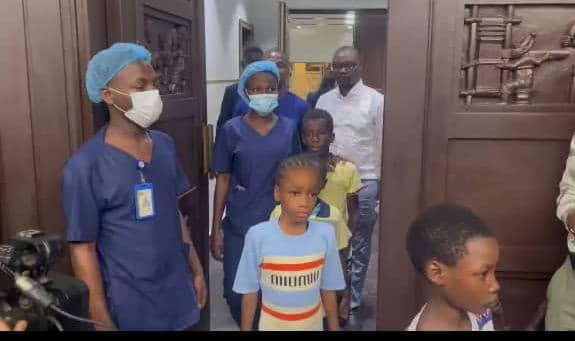
Relief and tears of joy filled the Government Office in Ibadan on Monday as rescued children and teachers from Oyo State arrived to be reunited with their families following days of uncertainty.

The group, who were reportedly abducted and later rescued in a coordinated security operation, were received by top government officials who assured them of adequate medical care, psychosocial support, and safety. Officials said the rescue was made possible through collaboration between state security agencies, local vigilantes, and community leaders.

Parents and guardians who had waited anxiously at the premises broke down in tears as they embraced their children and wards. Many described the reunion as “a second chance at life” and commended the Oyo State Government and security forces for their swift response.

In a brief address, a government representative said the administration remains committed to protecting schools and ensuring that no child is denied the right to learn in a safe environment. The rescued teachers were also applauded for their courage and dedication during the ordeal.

The children and teachers will undergo medical checks and counseling before returning home fully. Government officials added that security around schools across the state will be further strengthened to prevent a recurrence.

From Coup Leader To Biafran Soldier: How Major Nzeogwu Met His Death At Obollo Eke

Major Chukwuma Kaduna Nzeogwu died on July 29, 1967, while leading a Biafran campaign at Obollo Eke in Nsukka during the Nigeria-Biafra war.

His death has remained one of the most debated episodes of the conflict, especially given his controversial role in the January 15, 1966 coup.

Before the Obollo Eke offensive, Nzeogwu was not officially assigned to any Biafran command. This fueled rumors that the Biafran High Command was deliberately keeping him out of action out of jealousy.

Dismissing the claims, Biafran leader Dim Chukwuemeka Odumegwu Ojukwu gave three reasons why that was impossible:

1. No Threat To Leadership: “The headship of Biafra was firmly in my hands. There was no contest.”

2. Fear From Other Commanders: “Most Biafran commanders were uncomfortable fighting within range of Nzeogwu’s operation.” Ojukwu cited an example of Col. Bassey who reportedly abandoned his post on hearing Nzeogwu was headed to his base.

3. Personal Loss: “My half-brother, Tom Biggar, died in that same Obollo Eke campaign led by Nzeogwu. I didn’t have to sacrifice Tom to compromise anybody.”

Nzeogwu was killed in an ambush laid by troops of the 21 Battalion under Brigadier Emmanuel Folusho Sotomi.

Speaking years later, Sotomi said Nzeogwu likely stepped on mines laid by troops commanded by Captain Inua Wushishi.

According to Sotomi, after he was captured, Nzeogwu asked to be taken to “Commander Emmanuel.” By the time he was brought to Sotomi, he had lost too much blood and died shortly after without making a coherent statement.

His body was taken by federal troops and buried with full military honors in Kaduna.

That gesture has been contested in some quarters, given that the 1966 coup he is linked to is still regarded by many as sectional.

Despite fighting for Biafra, records show Nzeogwu was not keen on the war. In a letter to his friend, Gen. Olusegun Obasanjo, he stated his opposition to the conflict.

Analysts believe his decision to fight may have been influenced by his circumstances in detention, similar to other officers like Lt. Col. Victor Banjo, Major Wale Ademoyega, Captain Ganiyu Adeleke, and Lt. Fola Oyewole.

Nzeogwu’s death at Obollo Eke closed the chapter on one of Nigeria’s most enigmatic military officers — a man who helped start a coup, opposed a war, and ultimately died fighting in it.

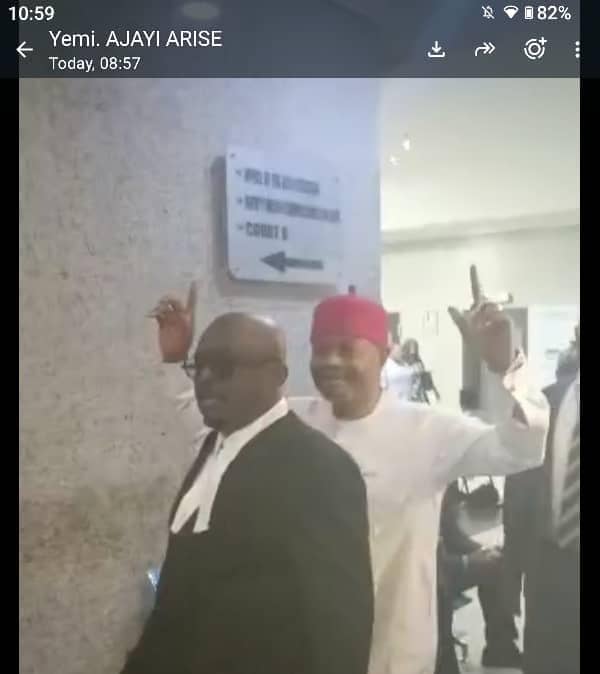
BREAKING: Former Minister Uche Nnaji Pleads Not Guilty To Certificate Forgery, Granted ₦20m Bail

Former Minister of Innovation, Science and Technology, Uche Nnaji, has pleaded not guilty to six counts of alleged certificate forgery and money laundering filed against him by the ICPC.

Nnaji was arraigned on Monday before Justice Joyce Abdulmalik of the Federal High Court in Abuja.

According to the charge sheet, the ICPC alleges that Nnaji forged:

1. A degree certificate from the University of Nigeria, Nsukka [UNN]

2. An NYSC discharge certificate submitted during his 2023 ministerial screening

The Commission also accused him of receiving about ₦29.5 million in salaries and emoluments under false pretenses, as well as money laundering.

Both UNN and NYSC have reportedly disowned the certificates in question, following months of investigation.

Nnaji pleaded not guilty to all six counts.

Prosecution counsel told the court it was ready to begin trial immediately and had three witnesses present.

His lawyer, Ogwu Onoja, SAN, asked for more time to prepare and moved a bail application filed on July 9. The prosecution did not oppose it.

In her ruling, Justice Abdulmalik granted Nnaji bail in the sum of ₦20 million with one surety.

Bail conditions:

– Surety: Must be a Federal Civil Servant not below Grade Level 15

– Residence: Surety must reside in Abuja

– Travel documents: Nnaji must deposit both his official and personal passports

The case was adjourned to September 21, 2026 for commencement of trial.

Nnaji was arrested on June 30, 2026 by DSS operatives at Nnamdi Azikiwe International Airport, Abuja, upon arrival from Enugu.

The arrest followed a Federal High Court order issued on June 11, 2026, after he allegedly failed to honor multiple invitations for questioning.

He resigned from the Federal Executive Council on October 7, 2025, calling it a “principled decision to respect the sanctity of due process.” At the time, he denied any wrongdoing and described parts of the case as politically motivated.

Nnaji is currently the PDP governorship candidate for Enugu State.

A Return To My Alma Mater…By Bolanle Bolawole

“In a race – which life is – everyone has his lane. Once you have chosen a lane, stay in it. If you cross lanes in a relay, you get disqualified. If you are not focused and drop the baton, you also get disqualified. Fast and steady, not slow and steady, wins the race of life”

Last Thursday, July 9, 2026 was another day of nostalgic feelings for me as I returned to my alma mater, Owo High School (OHS), Owo. The occasion was the second graduation ceremony for the graduating Class of 2026 organized by the national body of the Old Students’ Association ably led by its president, Dr. Foluso Falaye. I graduated from Owo High School in 1974, which is 52 years ago. None of the Class of 2026 was born then! Many in the audience also giggled when I mentioned that fact because they, too, had not yet come to this world at the time ! Yet, it looked like yesterday!

The event took place within the expansive hall of the sprawling Federal Medical Centre (FMC), Owo, directly opposite my old school. Readers of my columns must have read my recent intervention on FMC Owo and the nexus between it and OHS, as we fondly call our school. That was my first time within the FMC facility; so I never knew it was such a big place.

What I left out of my story on the FMC was the important role of a pressure group played by my social club, The Krown Klub (TKK), Owo, in launching an appeal fund and sensitization program for the take-off of the hospital in 1986. The highly impactful programme drew attention to the need for government action at the time, which we felt was being delayed. Virtually all of us members of TKK at the time were young, impressionistic university graduates. I was the Public Relations Officer and Master of Ceremony (MC) at the event which took place at the then empty grounds of the FMC, drawing the creme-de-la-creme of Owo elites from all walks of life, including traditional rulers, academia and business world. Thank you, Krownite Owolabi Daramola, for prodding my memory concerning this – but how could I have forgotten that!

One hundred and eighty-six students students graduated in 2026 from OHS, the vast majority of whom were Science students (120) while 55 and 11 were Arts/Humanities and Commercial students respectively. This is a significant departure from what used to be, in my own days when Arts students were usually in the majority. In those days, the demarcation was plainly between Science and Arts and there was nothing called “Commercial”, even though a few of today’s Commercial subjects were also offered then. However, new subjects, mostly Commercial, that were unknown to my own class are now in the curriculum.

As the chairman of the occasion, I had the honour and privilege to conduct the opening and closing ceremonies as well as give a speech. The most emotive aspect of the entire ceremony for me was when the sight-impaired students, two of whom were among the graduates, performed in songs and dance, especially the “ Ewi” rendition by the two male sight-impaired graduates. I understand that OHS has been designated by the government as a special school for the sight-impaired. My wife, herself an educationist, whispered in my ears that teachers of such special students must possess great endurance, patience, and understanding – and I wondered whether those teachers also receive special remuneration for their efforts!

Why Owo High School?

My speech at the event goes thus: “An occasion such as this brings memories flooding back into my mind. For reasons which I cannot now recall, I preferred Methodist High School, Owo to Owo High School, Owo. Maybe because of their bright uniforms – Yellow shirts over blue shorts. Twice I tried to force my choice on my father. Twice he stood his ground that it was Owo High School or nothing! I think it must have been because the founder of Owo High School, Pa Michael Adekunle Ajasin, was the political leader of my father and the entirety of Owo in those days. So I ended up marking time at All Saints Modern School, Owo for two years. The third year, I wrote the entrance examination to Owo High School and got admitted in January 1970,, graduating in July 1974, with one of the four best results in my Set.

“I was a Day Student in Forms 1-3 and Boarding House Student in the last two years. The boarding house experience was another education on its own. It allowed students from far and near to come together. Some parents even sent their children from abroad.

“Whatever you do in school as a student, it is important you do not allow your studies to suffer. That is your main reason for being in school. You should have an idea of what you want to become in life while still in secondary school, not after graduating. Your skills and talents ought to have started showing and flowering at this stage.

Mentorship is invaluable

“In those days, we had a Library that was stocked with newspapers. It was here that I first read in HEADLINES, a publication of the DAILY TIMES group, the story of Chief Obafemi Awolowo’s treasonable felony trial and imprisonment; the Wild, Wild West’s “Operation Wetie” and the Western Region crisis of the 1960s, among others. They whetted my appetite and, possibly, shaped my vision of what I later became in life.

“Our principal, Pa Ajasin, asked me if I would like to study in the Soviet Union when I came to collect my result but I said I preferred the United States. My interest was Howard University, established and made popular by Black American liberationists and Civil rights activists. It was a missed opportunity for lack of mentorship. Whatever you will become in life, mentorship is very important. So also those we consider as role models and heroes. My eventual course of study in the university took after my heroes. Indeed, at the then University of Ife (now Obafemi Awolowo University), Ile-Ife, I had the opportunity of studying at the feet of one of them, Dr. Segun Osoba, Marxist scholar and historian, who passed on recently.

“The ideas that I formed early in life shaped my vision and determined my choice of career. Destinies are shaped very early in life. So, don’t waste or trifle with your early life. We make choices in life. In doing so, we make mistakes. I had wanted to be an academician, just like my mentors, but I ended up being an accidental journalist. Maybe that is God’s plan for me!

“Be that as it may, I excelled and got to the pinnacle of the journalism profession and have won laurels and made waves there. It is debatable whether I could have achieved more as a university teacher. However, my passion for academics has not waned and I have found my way into the academic environment in some other ways while still practicing my journalism profession. What this tells us is that there are more options than one where anyone can excel.

Winning the race of life

“The gifts and talents of God in one’s life are the foundation of success. Discover them early and operate on them. Don’t imitate others. Don’t go to where you will struggle. Discover your flair and passion early and stick there. Then, work hard. Master whatever you do. Be focused. Decide very early what you want and let it be what will give you joy, happiness, and satisfaction. If it is wealth, you may not need to be like someone who wants to be a professor. And if academics, you need not run after unbridled wealth.

“In a race – which life is – everyone has his lane. Once you have chosen a lane, stay in it. If you cross lanes in a relay, you get disqualified. If you are not focused and drop the baton, you also get disqualified. Fast and steady, not slow and steady, wins the race of life.

“Life is give and take. Win some, lose some. Let challenges toughen you. Don’t run away from responsibilities. I made a name in my profession because I maintained my lane. I did four jobs but got paid for only one and many of my colleagues at the time thought I was foolish – but I was only training myself to be jack of all trades and master of all. Today, it has paid off!

“You must have heard it said that ‘Nothing ventured, nothing gained.’ Where there are privileges, there are also responsibilities and sacrifices to be made. Don’t take one and run away from the other. Because I waited to assume responsibility and take up the challenges of my office was how I etched my name in gold in my profession.

“You also might have heard them say that one road does not lead to the market. Yes, there are multiple roads that lead to success. But the principles are the same. Talents and gifts from God. Skills that we develop through education, hard work, and perseverance. Focus, patience and dedication oil the wheel of progress. Proverbs 22:29 says: “Seest thou a man diligent in his business? He shall stand before kings; he shall not stand before mean men.”

Nothing like contentment!

“Finally, whatever we achieve in life, if we don’t have contentment, it will always appear as if we have achieved nothing! Know that we are taking nothing out of this world. And when a person dies, what is usually known or remembered is not his or her bank account balance but the good or bad deeds ascribed to such a fellow.

Orlando Owoh, the juju musician, crooned that it is because of the poor that we were made rich. So be charitable.

“Etienne de Grellet said: ‘I shall pass this way but once; any good that I can do or any kindness I can show to any human being; let me do it now. Let me not neglect it, for I shall not pass this way again’.”

“Looking back as you, too, pass the Owo High School way, are you satisfied you did your best? When I passed through it in 1974 and looked back, I wasn’t satisfied I did my best. I looked back and told myself I should have studied harder. My WASC result would have been far better than what it was, even though it was still good. In other words, I could have made my best better if I were more focused. But I have never had the opportunity of passing through Owo High School again to make amends!

“This, perhaps, is what is meant by ‘Opportunity once lost can never be regained!’ You, too, are passing through the OHS way today. Have you made the best of the opportunity? Be assured, however, that there are more ways ahead that you will still pass through. Will you learn from your mistakes here and make a better use of those opportunities?

“You have no excuse because now you have what someone like me never had: Mentoring. If only I had the opportunity you are having now to listen to a speech like this! Now, you have the opportunity! Don’t waste it! Make the best use of it!

I must end by thanking the organizers of this impactful event. God bless you and your efforts!”

I have started looking forward to the 2027 edition, God willing!

turnpot@gmail.com 0705 263 1058

Bola Bolawole Is A Former Editor Of Punch Newspapers And Chairman Of Its Editorial Board

What Future For An Independent Bar In Nigeria? By Chidi Odinkalu

Three score and three years ago, a defining dispute erupted in the old Western Region of Nigeria over the scope and reach of constitutional conventions in determining or terminating the tenure of high-level political leadership. The Judicial Committee of the Privy Council, which ultimately had to pronounce on the matter, described conventions in that case as “a body of understandings which no writer can formulate.” The aftermath of that decision took the country to the brink of ruin.

This year, the Nigerian Bar Association (NBA) confronts its own moment of truth concerning how far conventions initially designed to accommodate national diversity in its leadership processes can be converted into ethno-tribal vetoes by entities that, in fact, are not part of its institutional or constitutional organs. The consequences for the association could be far-reaching.

For context, the NBA elects a new set of leaders every even-numbered year. It has long been the assumption that “the NBA is too important to be left alone.” Elections into its leadership organs unfold as a political marketplace for a complex competition of interests, many of them external to the legal profession. This year, the biggest issue is arguably the role of ethno-tribal caucuses at the Nigerian Bar.

The road to this point was paved by a combination of ordinarily unrelated events. On 14 August 1991, Taslim Elias died. He was Nigeria’s Attorney-General at independence at a time when the position was deservedly prefixed with the honorific “Honourable” (hence HAGF) and later became Chief Justice of Nigeria. At his death, he was a judge of the International Court of Justice (ICJ). To replace Elias for the remainder of his ICJ tenure, Nigeria nominated Bola Ajibola, a Senior Advocate of Nigeria (SAN), who was then himself serving as HAGF.

That step opened up a vacancy for the designation of the new HAGF. To fill that vacancy, military ruler Ibrahim Babangida nominated Clement Akpamgbo SAN. At the time, Akpamgbo was in the middle of his tenure as the 15th president of the NBA. In keeping with its constitution, the NBA’s first Vice-President, Priscilla Kuye, succeeded Akpamgbo as president. She was the first woman in that position.

The next cycle of elections into the leadership of the association was scheduled to occur the following year in 1992. In August 1992, members duly convened in Port Harcourt, capital of Rivers State, for the elections, but the conference broke up in extraordinary fracas. Five years later, as the embers of military rule began to fade, the NBA was resuscitated.

In the aftermath of that crisis and at the turn of the Millennium, the NBA introduced two reforms into its leadership process, one explicit and the other initially by convention. First, it abolished universal suffrage among its members, replacing it with a delegate-based system for selecting leaders. In 2015, however, universal suffrage returned. Second, it introduced a convention of rotating the most important leadership positions in the association among the founding three regions of the country – the Eastern, Northern, and Western regions.

Fifteen years later, the NBA wrote this convention into its constitution by way of an amendment, which mandated that “the Association shall, for the purpose of elections of National Officers be divided into three geographical zones namely – Northern zone, Eastern zone and Western zone.” The positions of President, three Vice-Presidents, and General-Secretary rotate among the three zones. In particular, the NBA constitution prescribes that eligibility to run for any of the rotated offices shall be determined with reference to natal origins, not establishment.

The NBA constitution goes further to prescribe that “where a position is zoned to any particular geographical zone, the position shall be rotated and held in turn by the different groups and/or sections in the geographical zone.” Remarkably, it does not say who can have a say in deploying these arrangements concerning zoning and micro-zoning.

The result has been a bazaar in nativist interest groups of lawyers in Nigeria, such as the Arewa Lawyers Forum (ALF); Eastern Bar Forum (EBF); Egbe Amofin Oodua (Egbe); Middle-Belt Lawyers Forum (MBLF); and Mid-West Bar Forum MWLF). They are not organs of the NBA in any form. Operating as ethno-tribal caucuses, these interest groups have sought to mediate the jostling for positions in the NBA. Until now, their roles had been informal, operating at best at the level of unwritten conventions.

In 2018, when the presidency of the NBA rotated to the East, the EBF endorsed Arthur Obi-Okafor, SAN, as their preferred candidate. In the election, however, Paul Usoro, who is also from the same region, was declared winner.

In 2026, the presidency of the NBA rotates to the West. The Egbe (an association of lawyers of Yoruba descent) and the MWBF are both active in this region. In the current election cycle, the MWBF decided not to present any candidates for the presidency, ceding it to lawyers native to the six states of south-west Nigeria.

The Egbe asserts primacy in the role of mediating the ambitions of lawyers from that region desiring to run for the NBA presidency. This year, the Egbe put forward Muyiwa Akinboro SAN as its candidate. However, Yemi Akangbe SAN and Oyinkan Badejo-Okusanya, SAN, who are both from the same region, declined to step down their ambitions. Egbe argues that it micro-zoned the position to the part of the South-West from which Mr Akinboro comes and asked the NBA to elbow the other candidates out of the contest so that he can emerge effectively unopposed.

In reality, this micro-zoning which the Egbe speaks of had been in existence since 2019. But in the 2020 contest for the NBA president from the western region, both Dele Adesina SAN and Tunde Ajibade SAN, who contested the position, came from outside that micro-zone. In 2008, Rotimi Akeredolu SAN emerged unopposed as the 24th president of the NBA by persuading other aspirants informally to stand down for him. The ethno-tribal trump asserted by the Egbe this year would be unprecedented.

In the face of predictable resistance, the association sued at the High Court in Ibadan seeking to get its way. The court issued rapid-fire interim injunctions against the NBA’s election process. The NBA appealed. On 11 June, the Attorney-General of the Federation, a defendant in the suits in Ibadan, ostensibly claiming permission from the Court of Appeal, called a meeting of the disputing parties with all living former presidents of the NBA.

The meeting constituted a three-person subcommittee headed by Wole Olanipekun SAN, the 20th president of the NBA. It included Lanke Odogiyan and Paul Usoro SAN, respectively the 22nd and 29th presidents of the association, but there is a dispute over the sub-committee’s remit.

An unsigned majority report by Olanipekun and Odogiyan claims the sub-committee was constituted to inquire into “the causes of the present conflicts within the NBA” and to make recommendations on the way forward to the HAGF. A separate report by Paul Usoro disputes this, saying the sub-committee was confined to helping the HAGF to fulfill his commitment to the Court of Appeal, to broker an amicable settlement among the parties.

The Olanipekun-Odogiyan report makes far-reaching recommendations. Among them, it asks for the postponement of the BAR elections (to August) and mandates the incorporation of the National Identification Number (NIN) as a voter identifier, claiming -rather incredulously – that the enrollment number, a unique identifier assigned by the Supreme Court to each lawyer in Nigeria, “is not a security number.” In particular, the report wants an end to universal suffrage in the NBA and insists that “The micro-zoning by the Egbe in line with the NBA Constitution should be allowed to stand.” Paul Usoro largely disagreed.

The main recommendations of the report are mutually irreconcilable.

If the Olanipekun-Odogiyan report had investigated the matter, it would have learnt that the bureaucratic process and data integration that should precede the NIN integration into the unique identification system for all lawyers in Nigeria can only be implemented by the Supreme Court in collaboration with the National Identity Management Commission (NIMC). This cannot be accomplished before August 2026 “or soon thereafter.” By prescribing impossible conditions, that report effectively sought to create conditions for the tenure of the current leadership to lapse, which would enable government to end the idea of an independent bar, just as the military regime did in 1992.

Rather than take his proposals to the parties or to the Court of Appeal from which he claimed his mandate, the HAGF mostly amplified the Olanipekun-Odogiyan report, endorsing nearly all of its recommendations in an error-strewn document ostentatiously headed “Directions and Outcomes.” But even he could not bring himself to accept the Egbe’s insistence on imposing its ethno-tribal preference on the NBA in the current cycle.

On 8 July, the Court of Appeal declined his thinly disguised effort to end-run the cases before the court. Judgment by the court is awaited.

Pending that, the NBA’s leadership election is likely to proceed as scheduled on 18 July under court protection. Two offices will be returned unopposed while eight will be contested. When the association last voted in 2024, there were 72,071 eligible voters. On 18 July, there will be 82,213 eligible voters (an increase of 14.07%), the largest in the association’s history.

A lawyer And A Teacher, Odinkalu Can Be Reached At chidi.odinkalu@tufts.edu

Nigerian Graduate Prostrates For Wife Who Sponsored Him Through University 

A Nigerian man’s graduation day turned into a public love letter after he prostrated for his wife to thank her for sponsoring his education.

A video of the emotional moment has gone viral on social media, drawing widespread admiration for the couple’s story.

In the clip shared by the wife, the newly graduated man is seen dropping to the floor at the ceremony venue in a traditional gesture of deep respect and gratitude.

According to her caption, the woman single-handedly bore the financial burden of his university tuition and supported him throughout his academic journey.

Speaking in the video, the graduate said:

_“Nah wife wey pay school fees, support am through the journey, hubby still prostrate for.”_

Translation: _“This is a wife who paid the school fees and supported him through the journey, and the husband still prostrated for her.”_

The moment was met with cheers at the venue and has since sparked thousands of reactions online. Many commenters praised both the wife’s sacrifice and the husband’s humility, calling it a rare public display of appreciation in marriage.

The video was shared with a caption celebrating their “joint victory,” framing the graduation as a win for both partners.

The story has resonated widely online as a reminder of the role of support, partnership, and gratitude in achieving personal milestones.

“Go And Do Your Duty”: What Ironsi Told Ojukwu Inside The First Supreme Military Council Meeting After The January 1966 Coup

On January 17, 1966, two days after Nigeria’s first military coup, five young soldiers gathered at the old Government House in Lagos.

Their task was unprecedented: run a nation of 55 million people.

The meeting, the first of the Supreme Military Council, was chaired by Nigeria’s new Head of State, 42-year-old Major General Johnson Thomas Umunnakwe Aguiyi-Ironsi.

With him were the four new military governors:

– Lt. Col. Hassan Usman Katsina, 33 – Northern Region

– Lt. Col. Adekunle Fajuyi, 40 – Western Region

– Lt. Col. Chukwuemeka Odumegwu Ojukwu, 33 – Eastern Region

– Lt. Col. David Akpode Ejoor, 34 – Mid-Western Region

None had any prior experience in civil administration.

Recounting The Coup

According to accounts documented by author Frederick Forsyth in his biographies of Ojukwu, much of the meeting was taken up with each officer explaining where they had been during the January 15 coup, what they had witnessed, and how they responded.

When the round of explanations ended, Aguiyi-Ironsi gave a direct instruction: return to your regions and resume administration.

But before the meeting closed, Ojukwu asked for clarity. He wanted to know what policy framework the new military government would adopt to govern the country.

Lt. Col. Katsina reportedly broke the tension with a light remark in Hausa, roughly meaning _“the Englishman with his long words,”_ drawing laughter from the room.

Aguiyi-Ironsi did not laugh.

He turned to Ojukwu and said:

Ironsi: “You are an army officer?”

Ojukwu: “Yes, sir.”

Ironsi: “You know your duty?”

Ojukwu: “Yes, sir.”

Ironsi: “Then go to Enugu and do it.”

That short exchange became the directive for all the governors. Go back to your regions and govern.

From Barracks To Government House

It was an extraordinary transition. Five career officers, all trained in the British military tradition and aged between 33 and 42, were suddenly responsible for running Nigeria’s regions at one of the most volatile moments in the country’s history.

The coup had toppled the First Republic and ended civilian rule. Political parties were banned. Public trust was fragile.

Upon returning to Enugu, Ojukwu moved quickly to widen consultation. He set up an Advisory Committee and a Council of Chiefs and Elders to guide governance in the Eastern Region. It was an attempt to bring civilian input into a military administration.

A Defining Moment

That first Council meeting captured the central challenge of Nigeria’s early military rule: soldiers trained to command troops were now expected to manage schools, roads, budgets, and politics.

Aguiyi-Ironsi’s response to Ojukwu “go and do it” — reflected both the urgency of the moment and the lack of a clear political blueprint.

Within six months, Ironsi himself would be killed in the July 1966 counter-coup. The country would then slide toward civil war.

But the Lagos meeting remains a key reference point. It was the moment Nigeria’s military, for the first time, had to shift from seizing power to exercising it.