Home Blog

Breaking: Lionel Messi’s Father Jorge Messi Dies At 68 After Illness

0

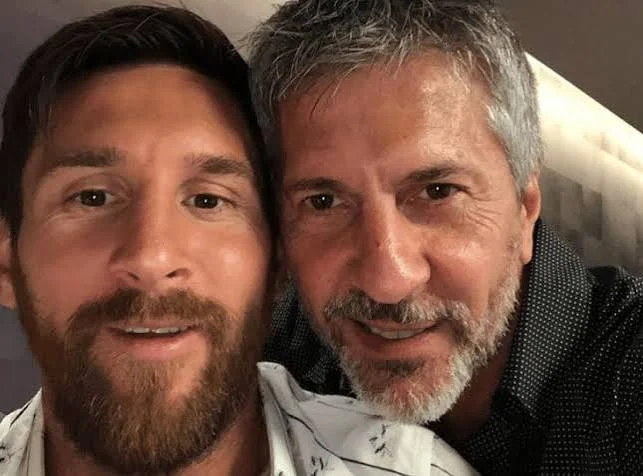
Jorge Messi, the father and longtime representative of Argentina captain Lionel Messi, has died at the age of 68 after a prolonged illness.

Reports from Argentina say Jorge passed away on Friday night at a medical facility in Rosario, the city where the Messi family has deep roots and where Lionel began his football career.

The man behind the legend

A pivotal figure in one of football’s greatest stories, Jorge played a central role in guiding Lionel from a talented youngster at Newell’s Old Boys to an 8-time Ballon d’Or winner and World Cup champion.

His influence was most crucial during Lionel’s early teenage years. When the future World Cup winner needed specialized growth hormone treatment, efforts to secure support in Argentina stalled. Jorge facilitated his son’s move to Barcelona at age 13, and stayed with him in Spain through the difficult early years while the rest of the family remained in Argentina.

In past interviews, Lionel spoke warmly of his father’s sacrifice during that period. He recalled how Jorge gave him the choice to return home or stay and chase his dream in Spain — a decision that shaped the course of football history.

Agent, adviser, and family man

Beyond football development, Jorge became Lionel’s trusted adviser and agent. He oversaw major contract negotiations and commercial deals throughout his son’s career. Despite his influence behind the scenes, Jorge largely avoided the spotlight and rarely granted interviews.

Concerns about his health surfaced during the 2026 FIFA World Cup, when Lionel appeared emotional after Argentina’s opening match. The family later confirmed Jorge was receiving treatment under specialist supervision.

Before dedicating himself to his son’s career, Jorge worked as a chemical technician in Argentina’s steel industry and rose to a managerial position. He also played football in his youth before leaving the sport following military service.

Tributes pour in

Jorge is survived by his wife, Celia Cuccittini, and their four children: Lionel, Rodrigo, Matías, and María Sol. Those who knew him described him as a devoted family man whose impact stretched far beyond football.

Tributes are expected from across the football world in the coming days as players, clubs, and fans honor the man whose guidance and unwavering support helped shape one of the most extraordinary careers in sporting history.

Tinubu Directs EFCC To Vacate Court Order Freezing Osun Government Accounts

President Bola Ahmed Tinubu has directed the Economic and Financial Crimes Commission, EFCC, to immediately vacate the court order freezing the accounts of the Osun State Government.

In a statement issued from the State House on Thursday, and signed by the President, he said he was informed that the EFCC obtained the order on August 5, 2026.

While affirming that anti-corruption agencies must operate independently, Tinubu said the timing of the action was “inauspicious” given that Osun State is days away from its gubernatorial election.

“It has come to my notice that the EFCC obtained a court order freezing the accounts of the Osun State Government,” the President said.

“I feel deeply embarrassed not by the EFCC’s exercise of its mandate backed by a court order, but by the timing of the agency’s action. Every action taken by an institution of State, especially at the federal level, is credited to me as President, even when I may not have had prior knowledge.”

Since assuming office, Tinubu said he has refrained from interfering in the operations of law enforcement and anti-graft agencies.

“I have consistently maintained that the EFCC and other agencies must discharge their statutory responsibilities independently, professionally, and without fear, favour, or political interference. Strong institutions operating within the law are indispensable to good governance and the rule of law,” he added.

However, the President noted that with the Osun governorship election imminent, nothing should be done to create the impression that federal agencies are being used to interfere in the electoral process.

“While I am yet to be fully briefed on the facts that informed the EFCC’s action, I am in no doubt that the timing is wrong. I am therefore compelled to intervene in the overriding public interest of preserving confidence in our democratic process,” he stated.

President Tinubu said he has directed the EFCC “to immediately proceed to court to vacate the order and discontinue whatever action it has instituted against the Osun State Government in this regard.”

He reaffirmed his commitment to allowing institutions to function without prior approval, but stressed that public interest and the credibility of elections must also be protected.

Does Nigeria Miss Fela, Other Activists Enough? By Paul Ejime  

Odoo is a business management software suite developed in Belgium. But its advert billboard often reminds me of Fela Anikulapo Kuti’s popular song with the same acronym.

*O. D. O. O,*  or Overtake Don Overtake Overtake, is the title of Fela’s 1989 album, which, like most of his revolutionary songs, did not spare political leaders in Africa for the hardships inflicted on the masses, while the ruling class basked in opulence.

The song’s chorus goes thus:

I get my money

Plan my plan finish

Start to go for market

Start to go for shopping

Before I reach market nko o?

Government show don enter

My plan don spoil o…

Overtake don overtake overtake!

The second stanza says:

When they want to call, eh

When they want to call, eh

When they want to call Nigerian government

Them give am name, “Federal Military Government”

For Libya dem give am name, “Liberation Council”

For Liberia dem give am name, “Redemption Council”

For Zaire (DR Congo) dem give am name, “Revolutionary Council”

Them get different different names

For different different governments

But the correct name for them

Na “soldier go, soldier come”

The next stanza adds:

Na so our lives for Africa dey roll

Since them say we get independence

The civilian government wey them dey

Na soldier dey protect them

When our lives roll small

He go go knock head for wall

When our lives roll small

He go go knock head for tree

When our lives roll small

He go go knock head for stone

When I see say our lives dey roll

Like one yeye ball

Wey one yeye wind

Dey blow from one yeye corner

I put my mouth for song:

“Kalakuta Show….

My first close encounter with Fela was at his Kalakuta Afrika Shrine in Ikeja, Lagos during the launch of *O. D. O. O*  in 1989. At that time, government-owned broadcasting entities were forbidden from playing Fela’s songs, and the ban probably still subsists.

However, as a correspondent with the News Agency of Nigeria (NAN), I was assigned by my Editor, Damian Obika (DD of blessed memory), to cover the launch. NAN is a government-owned wire service, but on this occasion, as journalists, we decided to push the boundaries of press freedom by publishing the story of Fela’s album launch and copiously quoting him calling for the release of 11 NEPA Senior Staff jailed over an anti-government strike.

The NAN story made headlines the following day, with other media outlets quoting the agency as the source, apparently expecting us to get into trouble. It was unusual for a government news agency to run such a “sensitive or controversial” story. But at NAN, we got away with it, and credit must go to the editorial management, which did not impose self-censorship.

In 1997, as the West Africa Bureau Chief of the Dakar-based Pan-African News Agency (PANPRESS), the editorial duty again fell on me to report on Fela’s passing in Lagos. I was in Monrovia, Liberia, to cover that country’s elections, which brought former warlord turned President Charles Taylor to power at the end of the first phase of Liberia’s civil wars, which killed an estimated 250,000 people.

Like his other iconic works, such as *Zombie, Water No Get Enemy, Sorrow, Tears and Blood, Shakara, Coffin for Head of State*  and *Expensive Shit,* Fela used his music to champion struggles against corruption, injustices, military rule, police brutality, colonialism/imperialism and the exploitation of African societies.

Born Olufela Olusegun Oludotun Ransome-Kuti to a clergyman and an activist mother, Fela was, until his death in August 1997, aged 58, a rebel with a cause. His open confrontations with successive Nigerian governments and their agencies made him, arguably, the most arrested citizen during his lifetime. Charges against him ranged from murder to armed robbery and assault.

In 1984, Fela was arrested, put on trial, and sentenced to five years in prison for foreign currency smuggling under the military regime’s draconian decree that banned Nigerians from operating domiciliary bank accounts. He was released after 20 months.

Watching Nigeria’s socioeconomic and political ecosystem today, with the apparent decimation of political opposition, subdued civil society, and almost compliant media, Fela is sorely missed.

Variously described as an artist, philosopher, and political activist, Fela was brave and used his music as a platform for resistance, challenging, and speaking uncomfortable truths to power.

It was no surprise that on the 31st of January this year, before the 68th Annual Grammy Awards, Fela made history as the first African to receive the Academy’s Lifetime Achievement Award, which is reserved for artists who made outstanding contributions to the recording arts.

Felabration is an annual festival conceived by Fela’s family in 1998 to celebrate the life and legacy of the Nigerian music icon. But where is the spirit of Fela or that of fellow late activist-lawyer Gani Fawehinmi in other Nigerians today? Gani subjected most government policies, laws/decrees, and measures, especially the controversial ones, to legal tests, whether he won or lost.

Where are the Nigerians that fought General Sani Abacha through NADECO, Radio Kudirat, Guerrilla journalism, or those who organised the #Occupy Nigeria protests during President Goodluck Jonathan’s administration after it raised the pump price of fuel?

Are Nigerians enjoying the conduct and performance of their elected representatives and the political class, who change political parties at will and live in opulence at the expense of the masses?

Are Nigerians satisfied with their country’s international image? Or, is Nigeria’s legendary novelist and poet Chinua Achebe vindicated in the title of his memoir There Was A Country, released in October 2012, six months before his death in March 2013?

Achebe wrote more than 20 works, including the iconic Things Fall Apart, published in 1958, translated into more than 50 languages. Some of the books are fiercely critical of politicians and the failure of leadership in Nigeria.

Nigeria’s once-vibrant organised labour and student union movement have capitulated. Except for the Chief Emeka Anyaoku-led Patriots, Prof. Chidi Odinkalu, Dr Oby Ezekwesili, Omoyele Sowore and a few other groups and individuals with alternative voices, Nigeria can be likened to a large Orchestra under a supreme conductor, who are oblivious of the feelings of their audience.

Fela, Achebe, and Gani have since gone to meet their Creator. What did other Nigerians learn from their activism for a better Nigeria?

Africa, the Black race, and the world at large are anxiously waiting for Africa’s most populous nation to wake up from slumber and provide much-anticipated leadership.

The January/February 2027 general election is an opportunity for transformational changes. But will the usual primordial politics of religion and ethnicity permit it? Political battles are fought more on social media, without concrete steps by stakeholders, including opposition parties, to improve citizen participation in the electoral process, given the dismal 2023 level, when less than 30 million voters cast their ballots in the presidential poll out of the 93.4 million registered voters in the country.

Despite constitutional provisions on checks and balances and the separation of powers, the executive and legislative arms of government at the federal and state levels are indistinguishable, while the courts are trying to outdo each other with outlandish decisions, thereby raising doubts about judicial independence and even enabling electoral outcomes to be settled in the courtroom rather than through the ballot box.

The weaponisation of poverty means that the people may have their say, but powerful and rich politicians will always have their way in Nigerian politics.

In addition to electoral malpractices such as vote-buying, voter intimidation and disenfranchisement, over-voting, ballot-snatching/stuffing and orchestrated violence to gain undue political advantage, it must be emphasised that any electoral process that produces less than 30% voter turnout will always raise questions about the legitimacy of its outcome.

Ejime Is A Global Affairs Analyst And Consultant On Peace & Security And Governance Communication

OBJ: “Choosing Atiku As My Running Mate Was A Mistake”

0

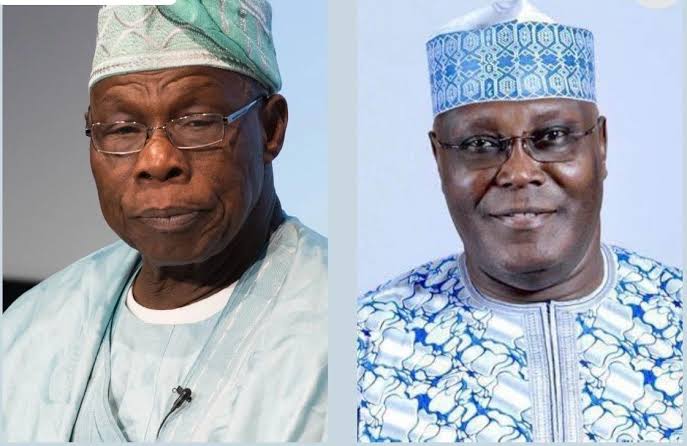
Former President Olusegun Obasanjo has described his decision to pick Alhaji Atiku Abubakar as his running mate in 1999 as a mistake.

Speaking during a recent engagement, Obasanjo said that in hindsight, the partnership with Atiku during the civilian administration from 1999 to 2007 presented significant challenges.

“Looking back, the choice of Atiku as my running mate as civilian president was a mistake,” the former president stated.

The duo governed Nigeria for 8 years under the Peoples Democratic Party, PDP, but their relationship later became strained due to political differences.

Obasanjo’s comment has since sparked reactions online, with many Nigerians revisiting the dynamics of the Obasanjo-Atiku administration.

The Nigerian State, The Media, And The Man In The Yellow House, Achike Chude

Recently, the Nigeria Union of Journalists did the seemingly unthinkable. The apex journalism body conferred its ‘Man of The Year Award’ to Mr Oluwatosin Adeola Ajayi. Very normal, right? Until you realise that Mr Ajayi occupies a very important, strategic and sensitive position within the security architeture of Nigeria. His primary duty is ‘the protection and stability of the Nigerian state. He is the Director General of the Department of State Services otherwise known as the DSS and, despite expected noises from some quarters he is said to be deserving of the award for a novel approach in his engagements with the media – at least in the past 18 months.

The DSS has obviously evolved over the years, from the period of it’s dreaded precursor the Nigerian Security Organization, NSO, then under various military dictatorships whose natural inclinations for lawlessness and rights violation were legendary.

It was therefore almost a given that when the well-articulated democratic winds blew away the men in jackboots from power, it also helped to bring in a new dispensation of men and women who swore that they were children of democracy capable of ensuring that democracy’s bounteous blessings would be made manifest before Nigerians.

Part of the anticipated legacy of the new civilian dispensation was the urshering in of democracy’s imperatives which fruits and benefits were presumably the rule of law, respect for human rights, political transparency and accountability, a free press, etc etc.

Since then the quintet of Obasanjo, Yar A Adua, Jonathan, Buhari, and Tinubu have all traversed Nigeria’s power centre at the ‘Rock’ in Abuja. The results of their collective leadership for the past 27 years have been mixed. Of the quintet, Tinubu’s continuous journey as the president is still ongoing albeit with a hazy future, in view of the incoming election in 2027.

Though the general direction of the country has now certainly been clouded over by myriads of socio-economic negativities, especially the hydra-headed problem of insecurity, the country has also witnessed very modest gains. But it is clear that whatever gains that have been achieved would always pale into insignificance for as long as present socio-economic contradictions inflicted by the political class are not radically addressed through elitist consensus by these causative agents who are all beneficiaries of the struggle to enthrone democracy in the country.

That Nigeria is perhaps at its most challeged point post-civil war is not a matter of debate. You would think that after twenty-seven years of ‘unbroken democracy’ the longevity of democratic control of political power would provide the country the opportunity to sooth and repair the country’s religious, ethnic, and geo-political tensions. Sadly, the outcome of our democratic experiment since 1999 has been the excercabation of these faultlines by some within the political class for parochial purposes.

The consequences of these deficits and derelicts have resulted in the generation of social tensions exercabated further by increasing poverty and a general state of hopelessness. These scenarios constitute a combustible dynamic capable of threatening the free civic space and the power of the state. Confrontation then becomes inevitable between that sector of the public with the constitutional mandate to defend the civic space and protect our democracy – the media, and the body set up by law to ensure state stability, cohesion, and continuity – the DSS. Other security agencies have also at various times weighed in in ways detrimental to the free exercise of journalism in the country.

Data from press freedom watchdog organizations—including the Centre for Journalism Innovation and Development (CJID), Media Rights Agenda (MRA), Reporters Without Borders (RSF), and the Committee to Protect Journalists (CPJ), highlights persistent press freedom violations in Nigeria, with security forces identified as primary perpetrators.

CJID’s Press Attack Tracker has recorded over 1,326 press freedom violations in Nigeria since 1986. In terms of fatalities, Nigeria leads West Africa in journalist deaths, accounting for 28 fatalities recorded between 1986 and 2026.

According to MRA and CJID reports, government security agencies account for more than 50%–60% of all documented attacks on journalists:

The police is reputed to be responsible for 48% of all violations.

That of the Department of State Services (DSS) stood at 7%–10% before now, while that of non-state actors stands at between 20%–25%. This involves targeted physical assaults during election coverage or investigative work.

Of all violations in the past 18 months, those by operatives of the Department of State Services seem to have come to a screeching halt except for a few abnormalities like that of Benue State recently when the DG of the service had to personally apologize to the NUJ for an infraction from his men. For the Director General of the Department of State Services to apologize to the Nigeria Union of Journalists for the conduct of his men in Nigeria is ‘insane,’ almost unbelievable, but very humbling and refreshing. He could have chosen otherwise, doubled down in support of his men and the heavens will not fall. He did the exact opposite.

But this change did not just happen one magical night. The dialogue between the Nigeria Union of Journalists and security agencies in the country has been ongoing for some time to ensure the protection of Journalists lawfully and constitutionally doing their duties of reporting the news, investigating and holding public office holders accountable. In all of these engagements either directly or indirectly, only one agency has been openly forthcoming. Only one agency has been willing to put its mouth where its money is. Only one agency has given a nationwide instruction to its men and women in the field to refrain from the harassment, intimidation, arrest of journalists anywhere in the country and siezure of the tools of their trade.

The man who made this possible, the DG of the DSS, Oluwatosin Ajayi Adeola went further to declare that no arrest of journalists anywhere in the country would be tolerated in any form and if there is any matter that requires the scrutiny of the DSS, the leadership of the NUJ would be informed. While the relationship with the DSS hopefully continues according to expectations the NUJ will continue to insist that a free and unhidered press is the gateway to the protection of our hard one democracy, national stability and cohesion – two elements at the core of the establishment of the Department of State Services.

So far, in the past one year and beyond, the DSS has kept to its promise. Arbitrary arrests and harassment of the people of the pen are no longer taking place.

For daring to do what his predecessors never even considered for a moment, methinks that Mr Oluwatosin Ajayi Adeola, the man in the Yellow House is indeed deserving of the award of ‘Man of The Year’ by the Nigeria Union of Journalists.

Achike Chude Writes From Abuja

Israel’s General Election Will Be Like No Other Before, By Yossi Mekelberg

There was something symbolic about the Knesset’s setting of the Israeli general election for 27 October. Most political parties preferred a different date but were unable to reach an agreement. Instead, they allowed the clock to run down until the last day permitted by law: even this relatively minor decision became a source of political contention. That well reflects the context for this election. Israelis will head to the polls in three months with the country more polarized than ever.

By any standard, this general election is the most consequential in Israel’s history, both domestically and internationally. Its outcome will have far-reaching implications not only for Israel but also for Palestinians in the occupied territories and for the wider region.

As matters stand, the projected results point to another prolonged political stalemate. Opposition parties are polling better than those that make up the current coalition. But most Zionist parties still insist they will not join forces with Arab parties (who primarily draw support from Palestinian citizens of Israel). This decision is morally reprehensible and politically self-defeating – leaving the opposition short of the 61 seats required for a majority in the 120-member Knesset.

Moreover, the opposition parties have so far maintained the justified position they adopted before the 2022 election: they will not form a government with Prime Minister Benjamin Netanyahu. Initially, this stance was driven by his legal status as a defendant in three corruption cases. Today it is reinforced by his reluctance to take responsibility for the catastrophic events of 7 October 2023 and what has followed.

Unless the election produces a far more decisive result than current polling suggests, or one of the political camps reneges on its campaign pledges, Israel may once again find itself heading back to the polls after 27 October – in search of a decisive outcome.

This election is taking place in extraordinary circumstances – originating in 2022 when Netanyahu, operating in the shadow of his ongoing corruption trial and determined to remain in power, formed a government with some of the most extreme right-wing, ultra-nationalist, messianic and anti-democratic elements in Israeli politics. His decision saw them become indispensable coalition partners.

From the coalition’s inception, its most radical members were determined to weaken the judiciary and, with it, Israel’s system of checks and balances – the pillars of its liberal democracy. Their proposed judicial reforms sparked one of the largest protest movements in Israeli history, with hundreds of thousands of Israelis taking to the streets, week after week, in an effort to stop what they regarded as the erosion of democratic institutions.

At this critical moment, Hamas launched its cross-border attack on Israeli communities near the Gazan border – the deadliest day in Israel’s history, in which nearly 1,200 people, many of them civilians, were killed, and 251 taken hostage.

Since then, Israel has become embroiled in multiple conflicts involving Gaza, Lebanon, Syria, Yemen and, most significantly, Iran – with no clear end in sight on any front. Worse, Netanyahu’s gamble that President Donald Trump would prosecute the war with Iran until the regime in Tehran was destroyed has backfired: Iran remains intact. And Israel’s relations with the US are at a low ebb.

On the security front, voters are being asked to judge a government that has continually failed in its most basic responsibility: protecting its citizens. It has presided over prolonged wars while facing unprecedented external legal and diplomatic challenges.

The war in Gaza has claimed tens of thousands of civilian lives, displaced the overwhelming majority of the territory’s population many times over, and failed to achieve the government’s declared military objectives. At the same time, it has left Israel more internationally isolated than at any point in recent decades. The government is defending itself against allegations of genocide before the International Court of Justice, and the International Criminal Court has issued arrest warrants for Prime Minister Netanyahu.

Meanwhile Iranian missiles have struck Israeli towns and cities for the first time, killing civilians. And Hezbollah’s attacks have forced the evacuation of tens of thousands of residents from northern Israel.

Equally significant is Netanyahu’s continued refusal to establish a state commission of inquiry with full powers to compel testimony, obtain documents and investigate the failures surrounding 7 October and the wars that followed. That refusal remains an open wound in Israeli society and is likely to weigh heavily on voters’ minds.

Security, however, will not be the only issue shaping the election campaign. At least ten parties appear likely to surpass the 3.25 per cent electoral threshold required to gain representation in the Knesset. That ensures a highly fragmented political landscape – which will make it even harder to address fundamental questions about the future character of Israeli democracy, the balance between the branches of government, and relations among the country’s diverse communities.

The period between the dissolution of the Knesset and the formation of the next government… could prove especially volatile.

Particularly contentious are relations between secular Israelis and the rapidly growing ultra-Orthodox population. The final weeks of the current Knesset have been marked by a rush of controversial legislation, much of it aimed at expanding executive power at the expense of judicial independence and media freedom.

Among the most divisive measures is legislation seeking to entrench exemptions for ultra-Orthodox men from compulsory military service. This issue cuts across traditional political divisions: for Israelis who have been through compulsory service or spent hundreds of days in reserve duty since October 2023, exemptions are unacceptable, and may prove decisive when they cast their ballots.

One of the enduring enigmas of Israeli politics is that, despite Netanyahu’s unprecedented failures during his longest period in office, the principal opposition parties struggle to offer a clear policy alternative.

In many areas, they promise to pursue broadly similar objectives but with greater competence. This is particularly evident on the Palestinian issue, where most remain reluctant even to articulate support for a two-state solution or an end to the occupation.

Likewise, on the topics of Iran, Lebanon and Syria, they generally differ more in style and political approach than in strategic direction, placing somewhat greater emphasis on diplomacy while maintaining Netanyahu’s sole reliance on military power. The trauma of 7 October, and the entrenched prevailing opinion among Israelis that all security threats are existential and that there is hardly any diplomatic solution to them, are not something politicians are prepared to challenge, at least not in this election.

The period between the dissolution of the Knesset and the formation of the next government, however many election rounds that may require, could prove especially volatile. Netanyahu will remain head of an interim government, retaining full executive authority, including the power to initiate military action.

There is concern that an ageing, politically weakened and increasingly desperate prime minister could use escalation on one or more fronts to create a renewed sense of national emergency. That could happen even in defiance of President Trump, with US-Israel relations in their current condition. Iran, Lebanon, Gaza or the West Bank could all become arenas for such escalation, encouraged by the most extreme members of the coalition.

In one sense, the October election cannot come soon enough. Israel is in urgent need of political renewal after years of paralysis and deepening division. Yet the months ahead are likely to witness one of the most toxic and bitter election campaigns in the country’s history. Against the backdrop of ongoing wars, fears of political violence and the real possibility that the vote will once again fail to produce a decisive outcome, any sense of anticipation is tempered by caution, and even trepidation.

Prof. Yossi Mekelberg Is A Senior Consulting Fellow, Middle East And North Africa Programme, Chatham House, London.

Asante, Ex-ECOWAS Court President, Nominated To Ghana’s Supreme Court

Justice Edward Amoako Asante, the immediate-past President of the ECOWAS Court of Justice (ECCJ), has been nominated to Ghana’s Supreme Court. He completed three terms of six years as President of the ECCJ in October 2024.

A judge of the Court of Appeal, Justice Asante, and his colleague, Justice Sophia Rosetta Bernasko,  were among the three nominees to the apex court by President John Dramani Mahama.

Tony Forson, the only nominee from the private legal practice, is a former President of the Ghana Bar Association (GBA), with many years in the legal profession.

Under Ghana’s constitution, the President appoints Supreme Court justices on the advice of the Judicial Council and in consultation with the Council of State. The nominees are then vetted for approval by the Committee of Parliament.

The approval of the latest nominations will increase the number of justices of Ghana’s Supreme Court from 18 to 21, thereby strengthening its capacity to handle constitutional, civil and criminal cases.

Justice Asante brings to his new role a wealth of judicial experience and accomplishments. In October 2025, he was appointed to the prestigious Advisory Committee of the United Nations Human Rights Council, an 18-member think-tank, whose membership requires an “understanding of human rights mechanisms; a proven track record of impartial decision-making and diplomatic acumen to traverse intricate terrains.”

Justice Asante’s presidency of the ECOWAS Court oversaw the expansion of its jurisprudence through the delivery of ground-breaking rulings on civil and political rights anchored on continental and international instruments.

In 2020, he received on behalf of the Court the Columbia University Global Freedom of Expression Award, which was created in 2015 by the New York-based University to recognise judicial decisions that strengthen Freedom of Expression worldwide.

Under his presidency, the ECCJ also developed the Electronic Case Management System (ECMS), which enables litigants to file briefs virtually and empowers the court to hold virtual sessions to reduce costs for litigants and significantly improves access and the implementation of human rights instruments in the region.

Justice Asante values strategic communication and was instrumental in revolutionising the court’s website, making it more dynamic and compliant with technological advancements.

Video: 1 Dead, Traffic Paralysed After Multiple Trucks Crash On Lagos Bridge

0

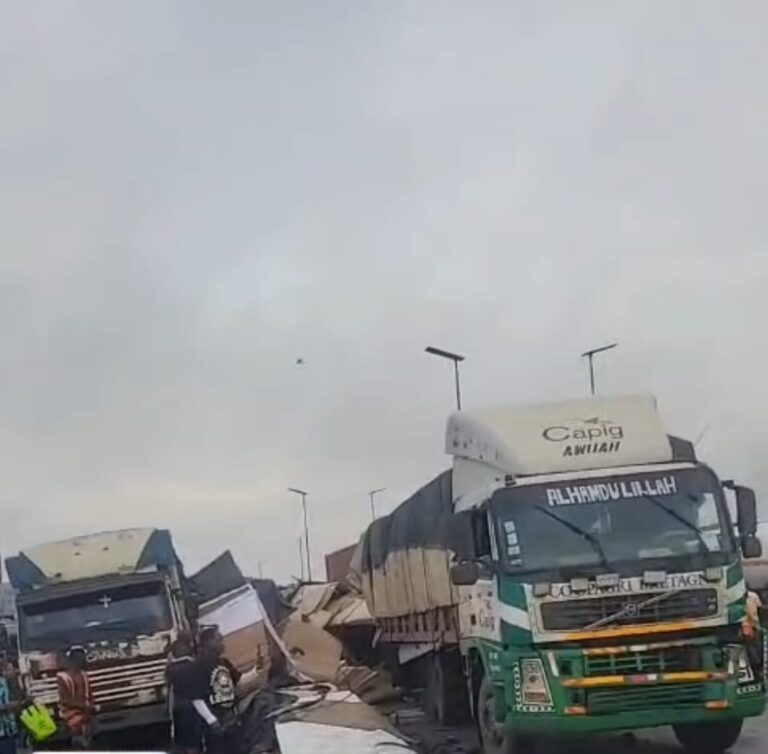
Traffic on the Lagos-Ibadan Expressway was brought to a standstill early today after a multiple-vehicle crash on Kara Bridge claimed the life of a motor boy.

LASTMA said the accident involved three articulated trucks, two Canter trucks, one Sienna, and an overturned trailer carrying chemicals. The obstruction caused a chain reaction and a massive gridlock from Kara through Berger to Otedola Bridge.

Emergency teams from LASTMA, LASEMA, FRSC, and the Police responded swiftly. The trapped motor boy died at the scene and his body was evacuated.

LASTMA GM, Olalekan Bakare-Oki, urged truck drivers to ensure vehicle roadworthiness and avoid reckless driving. He also advised motorists to use alternative routes via Isheri-Olowora and Ogunnusi as clearance continues.

PFN Rejects Muslim-Muslim Ticket For 2027, Warns Against Laws Restricting Preaching

0

The Pentecostal Fellowship of Nigeria has rejected the idea of a Muslim-Muslim presidential ticket for the 2027 elections, saying Nigeria’s leadership must reflect its multi-religious and multi-ethnic character.

In a communique after its NEC meeting, the PFN said inclusive governance promotes unity and trust. The statement comes after the APC adopted President Bola Tinubu and Vice President Kashim Shettima as its 2027 ticket.

The Christian body also opposed any law that would restrict preaching, describing such moves as contrary to constitutional guarantees on freedom of religion and expression.

“While we support lawful regulation to preserve public order, it must not be used to suppress religious expression,” PFN said.

The fellowship urged government at all levels to uphold the Constitution and called on Christians to remain peaceful and law-abiding while engaging in dialogue to preserve national cohesion.

Senate backs Bill To Order Facebook, TikTok, Others To Open Offices In Nigeria

0

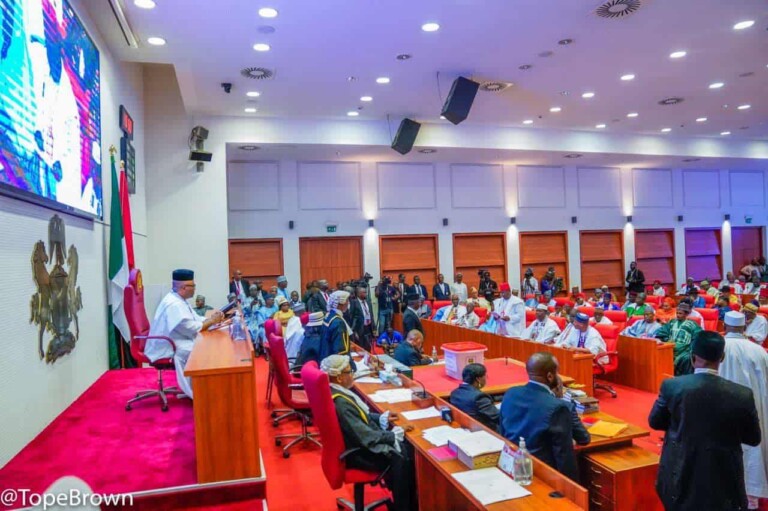
The Senate has advanced efforts to order top social media companies operating in Nigeria to establish physical offices in the country.

The public hearing on Thursday was organised by the Senate Committee on Information and Communications Technology and Cyber Security.

It also received broad support for a separate bill seeking to establish an Artificial Intelligence Academy in Omuo-Ekiti, Ekiti State.

The proposed legislation on social media platforms, sponsored by Senator Ned Nwoko (Delta North), seeks to amend the Nigeria Data Protection Act, 2023, to mandate social media companies operating in Nigeria to maintain physical offices within the country’s territorial boundaries.

The AI Academy bill is sponsored by the Chairman of the Senate Committee on Media and Publicity, Senator Yemi Adaramodu (Ekiti South).

Declaring the hearing open, Chairman of the Senate Committee on ICT and Cyber Security, Senator Shuaib Salisu (Ogun Central), said the two bills were aimed at strengthening Nigeria’s digital economy and technological advancement.

According to him, while the social media bill seeks to improve the regulation and protection of Nigeria’s cyberspace, the proposed AI Academy is intended to serve as a centre of excellence for artificial intelligence education, research and innovation.

President of the Senate, Godswill Akpabio, represented by the Deputy Senate Leader, Senator Lola Ashiru (Kwara South), described both proposals as forward-looking and nationally significant.

Argentine Fans Petition FIFA For World Cup Final Replay Over Alleged Officiating

Thousands of Argentine supporters are calling for a replay of the FIFA World Cup Final following Argentina’s 1-0 extra-time loss to Spain, citing concerns over officiating.

Spain secured the win on Sunday through a 106th-minute goal from Ferran Torres. The European side dominated possession and consistently pressured the Argentine goal throughout the match.

The defending champions struggled to create chances, failing to register a shot on target in regulation time. Argentina were also reduced to 10 men in the 93rd minute after Enzo Fernández received a second yellow card. Goalkeeper Emiliano Martínez faced sustained pressure before ultimately conceding to Torres in extra time.

Tensions boiled over at the final whistle. Leandro Paredes was seen pushing Eric Garcia to the ground and confronting Gavi, while Nahuel Molina was also involved in the altercation.

In the aftermath, a petition demanding that FIFA replay the final has gathered over 82,000 signatures.

“The recent final between Argentina and Spain was marred by controversial officiating,” the petition reads. “We urge FIFA to examine these events with seriousness and transparency, and to contemplate replaying the final free from the influence of biased refereeing.”

However, a counter-petition calling for Argentina to be banned from future World Cups reportedly garnered over 29 million signatures before it was closed.

Referee Slavko Vincic issued 46 fouls during the match, 25 of which were against Argentina. Fernández was sent off for two bookable offenses: dissent and a reckless tackle on Pau Cubarsí.

FIFA confirmed it is reviewing the conduct of Argentina players following the heated scenes at full-time.

2 Students Die, 2 Hospitalised In Ogun After Alleged Consumption Of ‘Laughing Gas’

0

Two suspected students of Gateway ICT Polytechnic, Saapade, have died and two others are hospitalised following the alleged consumption of nitrous oxide, commonly called “laughing gas”, in Isara-Remo, Ogun State.

The Ogun State Police Command confirmed the incident on Thursday. It said the incident happened on Tuesday, July 21, in the Oke-Ola Phase II area.

DSP Oluseyi Babaseyi, the Police Public Relations Officer, said the command is investigating the case.

“The deceased have been deposited in the morgue for autopsy, while the survivors are receiving medical treatment,” he said.

Police said an investigation is ongoing to ascertain the circumstances surrounding the deaths. The command also urged the public to desist from drug abuse.

Nitrous oxide has medical applications, but authorities warn that inhaling it recreationally poses serious health risks.

Miatta Fahnbulleh: Liberian Refugee Leads Britain’s Energy Future, By Sheriff Bojang Jnr

Born in Monrovia and forced to flee Liberia’s civil war as a child, Miatta Fahnbulleh went from refugee to rising political star, earning the new Prime Minister Andy Burnham’s trust. Now, as energy secretary, she’s tasked with overhauling Britain’s energy system while easing pressure on household bills.

Born in Monrovia in 1979, Miatta Fahnbulleh was a child when violence and dictatorship engulfed Liberia, forcing her to flee with her parents and younger brother, Gamal.

Her father, Henry Boimah Fahnbulleh – Liberia’s former foreign minister who later served as national security adviser in the Ellen Johnson Sirleaf administration – had fallen out with the military regime of Samuel Doe that ruled the country, turning the family into targets as political tensions escalated.

Their search for safety first took them to Sierra Leone, her mother’s homeland, before the family eventually settled in Britain. Fahnbulleh arrived in the UK at the age of seven, and her family was granted asylum. It was the beginning of a remarkable journey, from a refugee child rebuilding her life in a new country to one of the Labour Party’s most influential policy voices.

Gamal would later carve out his own public career as a journalist and presenter with ITV Granada, while Miatta took a different path through economics, public policy and, eventually, Westminster.

Her own experience of migration has informed her belief that behind the arguments over immigration are real lives, families and communities rebuilding after upheaval.

“My family left Liberia during a time of deep political unrest,” she said in a newspaper column in 2025. “We fled for our lives because my father spoke out against a military regime that would drive the country into a brutal civil war.”

Britain became home, but Fahnbulleh never lost her connection to her West African roots. Growing up in London, she found a sense of belonging in Peckham, the vibrant south-east London community she would later represent in parliament, shaped by decades of African and Caribbean migration.

That personal connection would later become part of her political message: that migration is not simply about people arriving in a country, but about the communities they help build.

“The people who come here don’t just settle; they contribute,” she said. “They open shops, run market stalls, drive buses, clean offices, teach in schools, and keep the NHS going.”

Her own experience has shaped one of her strongest political convictions: that immigration should be understood as a source of renewal rather than division.

In an October 2022 interview with IMIX, a charity that challenges negative media narratives about people who migrate or seek safety in the UK, Fahnbulleh argued that the debate around immigration had become increasingly distorted.

“For me, immigration is a success story of every country,” she said. “It is sad, we have got to a point where immigration has been made toxic, but if you look at the facts, the benefits of immigration to any country, any society always outweigh the losses.”

Long before she entered Westminster, Fahnbulleh had already established herself as a leading voice on Labour’s policy landscape. Trained as an economist, she studied philosophy, politics, and economics at Oxford before completing a doctorate in economic development at the London School of Economics. Her research focused on industrial policy in Ghana and Kenya, examining how governments can build economies and create opportunities.

Her career took her through some of Britain’s most influential policy institutions. She worked as head of cities in the Cabinet Office policy unit, became director of policy and research at the Institute for Public Policy Research, and later served as chief executive of the New Economics Foundation from 2017 to 2023.

At the British think-tank New Economics Foundation, she became known for advocating a more interventionist approach to economics, arguing that the government should play a stronger role in tackling inequality, supporting communities and driving the transition to a greener economy.

By the time she entered politics, she was already viewed as one of Labour’s emerging intellectual voices. The New Statesman named her among the most influential figures in progressive politics before she was elected, describing her as a natural candidate for Labour’s front bench.

Fahnbulleh’s rise through Westminster has been remarkably fast. She won the Peckham seat in Labour’s 2024 landslide victory, succeeding a constituency with a long Labour tradition.

Within days of entering parliament, she was appointed a junior minister at the Department for Energy, Security and Net Zero, giving her early experience in the department she would later lead.

Her political influence grew alongside her relationship with Andy Burnham, the former Labour leadership contender and now prime minister. Fahnbulleh became one of Burnham’s trusted policy voices, helping shape ideas around devolution, economic renewal, energy, and the cost-of-living crisis.

The fact that right-wingers are losing their minds over this appointment is evidence that Miatta Fahnbulleh is a good pick for this job.

Her position within Labour’s soft-left tradition has made her both influential and controversial. Supporters see her as a politician combining academic expertise with lived experience; critics have portrayed her as part of a broader ideological shift within the party.

British-American journalist Mehdi Hasan defended her appointment, saying on X: “The fact that right-wingers are losing their minds over this appointment is evidence that Miatta Fahnbulleh is a good pick for this job…”

Behind Fahnbulleh’s rise in British politics lies a family history shaped by public service, political struggle, and cultural influence. She was born into one of Liberia’s prominent families, where politics and social activism shaped generations.

Her grandfather, Henry Boimah Fahnbulleh Sr., was a prominent Liberian diplomat and intellectual whose career was marked by both influence and controversy. A former ambassador and senior government figure, he was convicted of treason in 1968 after prosecutors accused him of plotting against the government. It was alleged that he had criticised Liberia’s leadership in conversations with foreign ambassadors while serving as the country’s envoy to Kenya.

Fahnbulleh Sr. denied the charges, arguing that the case was politically motivated. After taking office in 1971, President William R. Tolbert Jr. pardoned him, recognising that he had been the victim of unjust accusations.

The family’s commitment to public life continued through Fahnbulleh’s grandmother, Mary Nema Brownell, a respected educator and peace activist who founded the Liberia Women Initiative and played a key role in mobilising women in Liberia’s peacebuilding efforts after the civil wars.

Fahnbulleh was named after her aunt, Miattah Fahnbulleh, one of Liberia’s most celebrated performers and widely known as the ‘doyenne diva’ of Liberian music.

Her aunt’s career crossed continents. She studied performing arts in the United States, performed at Harlem’s Apollo Theatre, worked with New York’s Negro Ensemble Company, and collaborated with South African jazz legend Hugh Masekela. She also represented Liberia at FESTAC ’77, the World Black Festival of Arts and Culture in Lagos, Nigeria.

Later, she became a leading advocate for women and children, founding Obaa’s Girls Educational Outreach to support girls’ education and campaigning for greater representation of women in public life.

Sheriff Bojang Jnr Is A UK-Based Journalist. 

BREAKING: Enugu Air Aircraft Reportedly Involved In Crash Landing Shortly After Take Off 

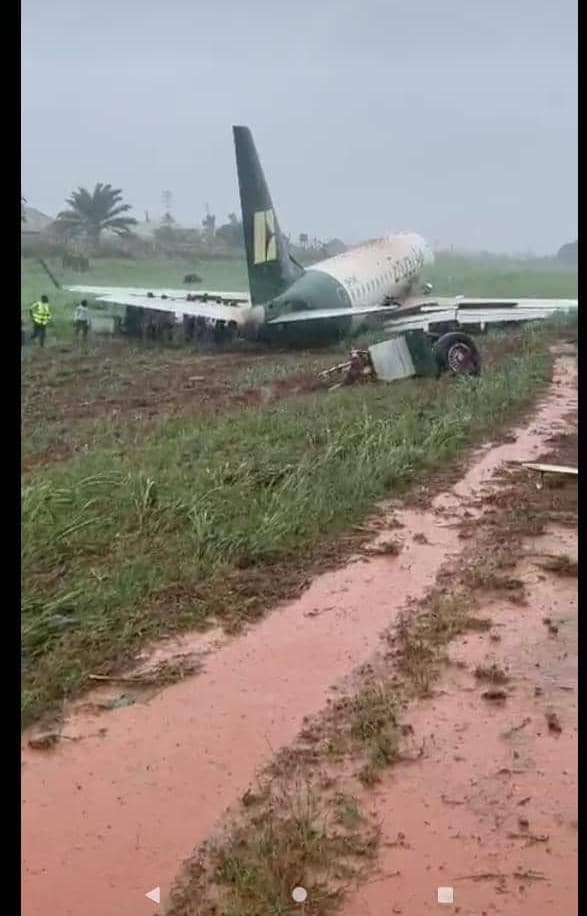
Enugu Air has confirmed that one of its aircraft experienced a runway incursion after landing at Benin Airport in Edo State earlier today.

The airline said all passengers and crew disembarked safely and there were no injuries or casualties.

The aircraft has been secured and aviation authorities have been notified. An assessment is ongoing.

Due to the incident, Enugu Air said some flight schedules may be temporarily adjusted. Passengers affected will be contacted directly.

The airline assured the public that safety remains its top priority and promised to provide further updates through official channels.

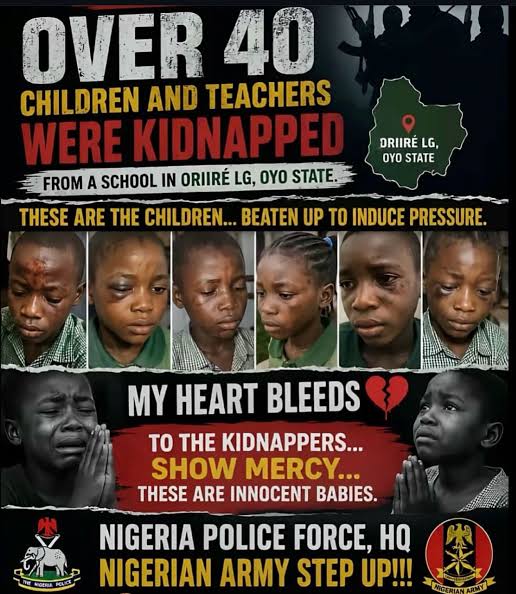
Oriire School Kidnapping: Federal High Court Jails 3 Men For Life, Sets Sept. Date For Trial

Three men have been sentenced to life imprisonment by a Federal High Court in Abuja over their involvement in the kidnapping of pupils and teachers in Oriire LGA, Oyo State.

Justice Salim Ibrahim handed down the sentence on Wednesday after Abdulrazak Umar, Yunusa Musa, and Shamsu Adamu Sani pleaded guilty to terrorism-related charges.

The court heard that the men, from Suleja, Niger State, admitted to concealing information about the attack’s masterminds and to membership of Darul Salam, an affiliate of the banned group Ansaru.

Prosecutors alleged that between January and May 2026, the trio conspired to kidnap school children and teachers in Oyo State. Umar also admitted to providing terrorist training via a WhatsApp group.

A DSS investigator told the court that the defendants made voluntary statements, which were recorded on video in the presence of their lawyer.

The judge convicted them on the counts they admitted to and adjourned the case to September 16 and 17, 2026, for trial to continue on the charges they denied.

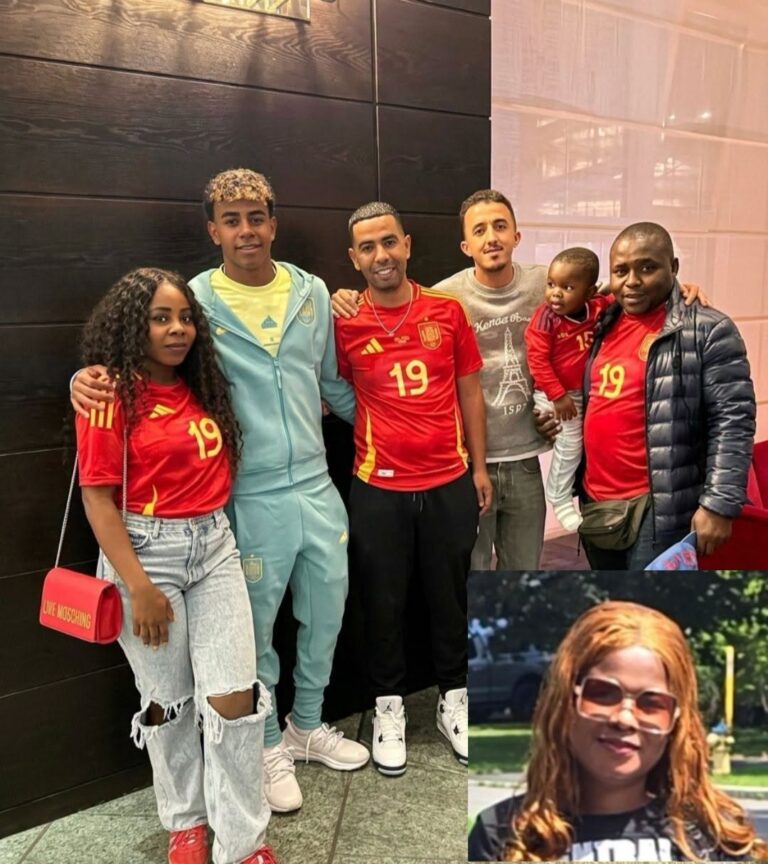
From An African Home To Global Stardom: The Inspiring Journey Of Lamine Yamal

When the world watches Lamine Yamal light up the football pitch, they see the goals, the trophies, and the fame. What they don’t always see are the sacrifices behind it.

Born in Spain to a Moroccan father and an Equatorial Guinean mother, Yamal grew up in a modest neighborhood. Though his parents separated when he was young, they remained united in one goal: supporting their son’s dream.

At just seven years old, FC Barcelona’s famed La Masia academy spotted his talent. But talent alone did not get him there. It took discipline, consistency, hard work, and a family that refused to stop believing.

Yamal’s story is a reminder to every African family and every immigrant parent working tirelessly for their children’s future: your background does not define your destiny, and your sacrifices are not in vain.

To every young person chasing a dream: keep going. To every parent: keep believing. The seeds you plant today may one day inspire the world.

Lamine Yamal’s journey proves that greatness has no tribe, no color, and no social class. It belongs to those who refuse to give up.

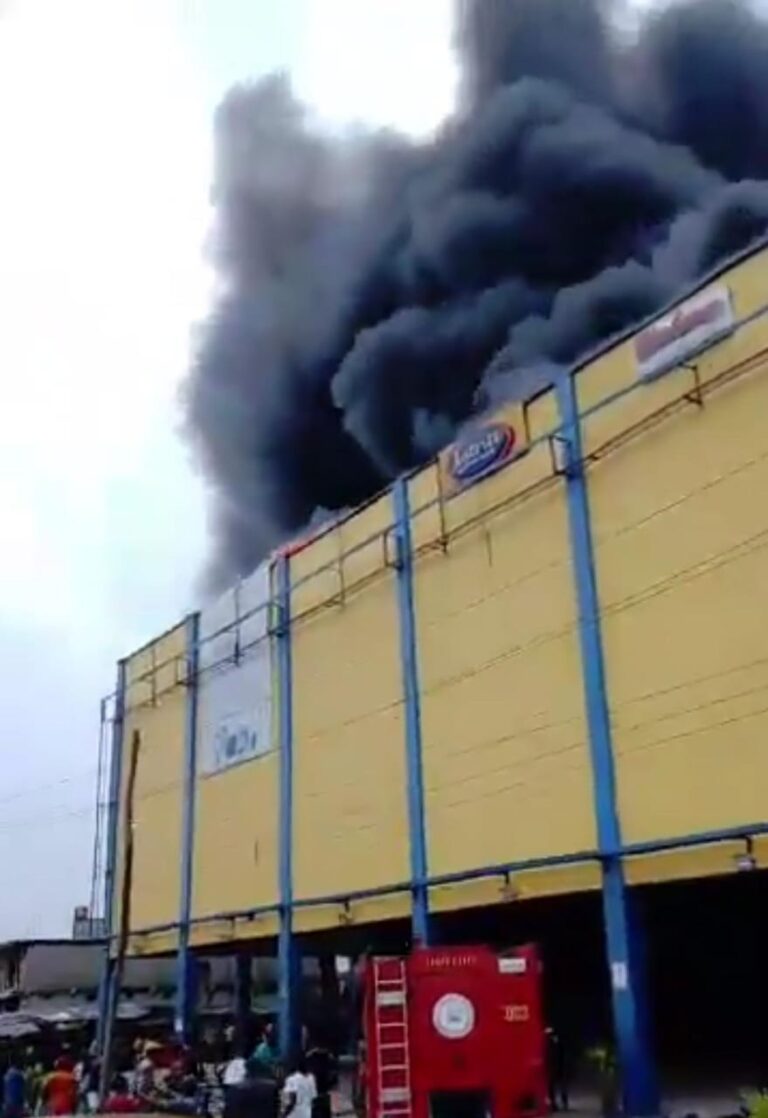
Fire Outbreak At Justrite Superstore In Egbeda Lagos

The Lagos State Fire and Rescue Service has put out a fire outbreak at Justrite Superstore on Akowonjo Road, Egbeda, Lagos.

The incident occurred on Wednesday, July 23, 2026, at the second floor of the commercial building housing the electronics section of the store.

According to a situation report signed by the Controller General, Margaret Adeseye, the distress call was received at 08:15 hrs, and firefighters from Abesan and Agege Fire Stations arrived at 08:28 hrs.

“Upon arrival, firefighters swiftly deployed firefighting equipment and commenced coordinated operations to contain the fire, prevent its spread to adjoining sections of the building, and safeguard lives, property and the environment,” the statement read.

The Service confirmed that the fire has been extinguished and mop-up operations are ongoing.

Preliminary findings suggest the cause of the fire may be linked to an alternative power source, specifically a solar inverter system. No casualty was recorded.

Abia Community In Mourning As Father, Wife, And Three Children Found Dead In Home

Five members of the Nnabugwu family were discovered dead inside their residence at Umuimo, Osisioma Ngwa LGA, Abia State, on Tuesday, July 21, 2026.

The deceased were identified as the father, Mr. Kachi Nnabugwu, his wife, Mrs. Chinaza Nnabugwu, and their three children.

According to residents, the family was last seen on July 18. After days without contact, neighbors forced open the house on Tuesday and found the bodies in a decomposing state.

Police sources said leftover food and a generator were found in the building.

Confirming the incident on Wednesday, July 22, Abia PPRO, DSP Maureen Chinaka, said the matter was reported by a brother of the deceased.

“The crime scene has been visited. A preliminary visual inspection of the bodies was conducted, and photographs taken. The corpses have been deposited at the morgue for preservation and autopsy,” she said.

Community members were also seen in a viral video performing traditional rites over the incident. Authorities say investigations are ongoing to determine the cause of death.

Outrage as Activist Alleges 22-Year-Old Drugged Pregnant 16-Year-Old To Induce Abortion In Delta

A 22-year-old man in Delta State is under fire after an activist alleged that he impregnated a 16-year-old girl and later drugged her in an attempt to force an abortion.

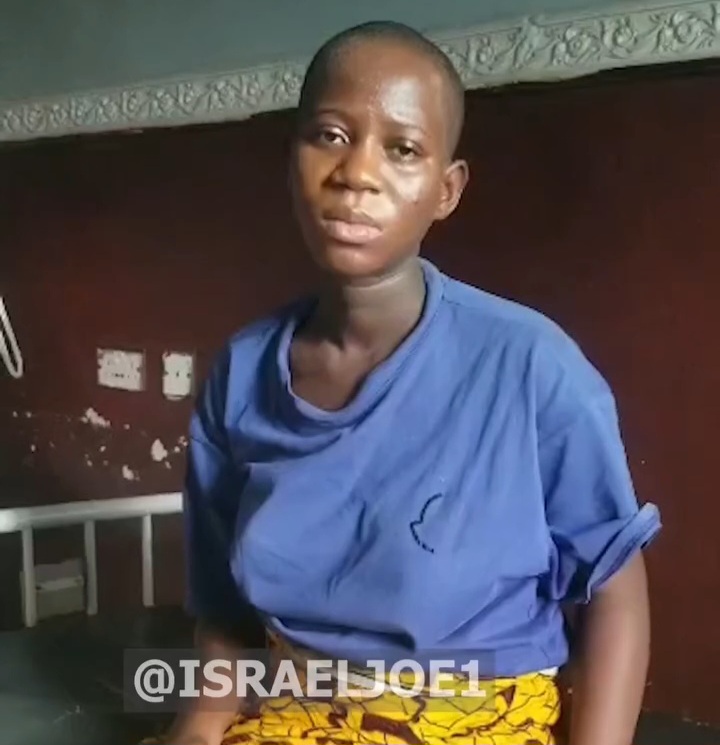
Activist Israel Joe shared a video of the teenager speaking from her hospital bed. He alleged that the suspect lured the girl to an undisclosed location, gave her a drugged drink, and fled after she lost consciousness. Good Samaritans later found her and took her to hospital.

Joe said the suspect was first arrested by community youths and taken to the Jesse Police Division, but was released after his father allegedly intervened with legal representation.

In a public appeal to the DPO, Jesse Division, Delta State Command, Joe condemned both the relationship and the alleged attempt to terminate the pregnancy.

“Sleeping with an underage girl should be discouraged holistically. This boy should be rearrested immediately and made to face the full weight of the law,” he wrote.

He added that the drug did not terminate the pregnancy, and the girl is now “a little stable” in hospital.

The activist urged the police to act swiftly and without bias to ensure justice.

Court Sentences Man To Life Imprisonment For Raping 16-Year-Old

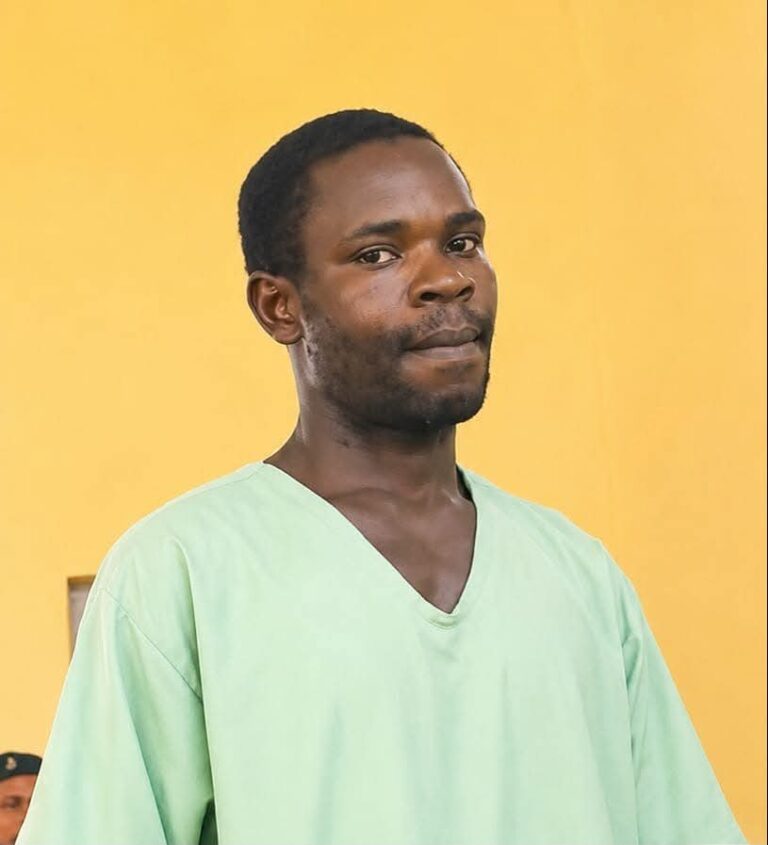
A High Court sitting in Calabar, Cross River State, has sentenced John Sunday Eyo to life imprisonment for raping a 16-year-old girl.

Delivering judgment on Tuesday, July 21, 2026, Justice Blessing Egwu found the defendant guilty of the offense.

Reacting to the ruling, Basic Rights Council Initiatives, BRCI, which handled the case, commended the Cross River State Police Command for its thorough investigation and prosecution support.

The organization also lauded the Attorney General of Cross River State, Etubom Ededem Ani, and the Director of Public Prosecutions, Mr. Okoi Ukam, for their commitment to ensuring justice was served.

Goodbye, Oloyede; Welcome, Aina, By Bola Bolawole

0

On Sunday, 19 July, 2026 the creme-de-la-creme of the Nigerian media gathered at BON Hotel in Ikeja, Lagos at the instance of the outgoing Registrar of the Joint Admissions and Matriculation Board (JAMB), Professor Ishaq Olanrewaju Oloyede, where the in-coming Registrar, Professor Segun Aina, was formally introduced to the media by Oloyede.

Those we refer to as the “ancestors” and “legends” of the Nigerian media as well as its movers and shakers were there. There is hardly anyone of note, especially in the famous Lagos-Ibadan axis of the Nigerian media, that was not there or, where unavoidably absent, was not ably represented. The venue was filled to capacity, such that extra seats had to be brought in to accommodate media topshots who kept coming in.

Alhaji (Comrade) Nojeem Jimoh, media consultant to JAMB, must have been overwhelmed by this particular response to his invitation to the media. He started by wanting to name and thank everyone present, but soon realised it was a mission impossible. Nojeem was the PUNCH editor who head-hunted me when I was a senior reporter with the Ibadan-based Sketch newspaper in 1987.

A fiery students union leader at the University of Lagos who got rusticated for a session for his activism, Nojeem’s fame had traveled amongst those of us comrades in other campuses long before I eventually met him in person. So, when he needed me to join forces with him at the PUNCH newspapers, it was an honour I could not resist.

Nojeem remains my mentor and role model. Therefore, I was happy for him last Sunday afternoon to see how his services, first to his friend, Oloyede, then to JAMB, and, finally, to the nation as a whole, flipped a chapter on a meritorious note. I understand Nojeem still has time left on his contractual obligations at JAMB – up till 2026, even beyond – if the new sheriff so desires; but who changes a winning team?

Oloyede set the ball rolling in his characteristically humorous but frankly-speaking manner by thanking the media for the support he enjoyed from them during his tenure that ends this month. “With friends like you, we don’t need an enemy”, he said to an applause! “You are friends, but you also hit us! But we always tell you our own side of the story.” He was right!

The relationship Oloyede courted with the media was not patronising; so, the media never treated him with kid gloves. Fortunately for him as well as for us, he ran an open, transparent and responsive administration. Always on top of any JAMB issue you may throw at him at short notice, he was every newsman’s delight. While many other administrators would cover up things, Oloyede would be the first to tell you where the problems are and what he is doing to tackle them. He also always solicits for and makes use of advice.

Speaker after speaker at the lunch enumerated Oloyede’s achievements and the many areas they will miss him. For me, what I will miss most are his candour, wisecracks and humour. Introducing his successor, he described him as a Professor of ICT “and not a Professor of Islamic Studies which I am!” Laughter! He described the support he received from the media as institutional and not personal and pleaded that it remained so. The media, he said, has helped build a house (a new, vastly-improved JAMB) “and you cannot build and then destroy.”

Oloyede was asked about his next port of call: Will he go into politics? NEVER! But why is it that people of conscience avoid politics like a plague? Edmund Burke says “The only thing necessary for the triumph of evil is for good men to do nothing.” But can you also blame the good men and women running away from Nigerian politics? What happened to those of their ilks who offered themselves for elective office – Gani Fawehinmi, Fela Anikulapo-Kuti, Tunji Braithwaite, Femi Falana, among others? Were they not ignominiously ignored by the same “suffering masses” they sought to deliver from their oppressors?

Will Oloyede then settle down after leaving JAMB to put pen to paper and write his memoirs? Again, the answer was NEVER! His opinion of memoirs is skeptical, thinking they could be riddled with untruths and fabricated tales. He wondered how anyone can remember the minutest details of events that happened 40, 50, 60 years ago like some memoirs purport! Furthermore, he said there are so many things he knows that cannot be put down on paper.

In other words, Oloyede may end up pitching his tent with the expansive tribe of Nigerian leaders who would rather go to their grave with vital information they consider too sensitive to share publicly. “I know so many things I cannot say”, he added. Oloyede will most likely return to the classroom at the University of Ilorin from whence he came. He was, however, not asked whether he would be available for another job appointment by the government.

Few administrators will do what Oloyede did: Handing over his media structure, as it were, to his successor. Nothing sours godfather-godson relationship in this country today better and faster than the fight over “structure.” Oloyede admitted he was advised against bringing his successor face-to-face with the media; that his action might be misinterpreted as him trying to put his successor under his wings and gift himself a “third term” of office by subterfuge. He, however, chose to sound Aina out and when the idea sat pretty with the latter, he went ahead with it.

The succession from Oloyede to Aina is generational, the type recommended by Pastor Wale Adefarasin, Senior Pastor of Guiding Light Assembly, Ikoyi, Lagos, in his book, “The succession crisis in Nigeria”. Pastor Wale is the elder brother of his more flamboyant brother, Pastor Paul Adefarasin, of the House on the Rock church. Aina said Oloyede is old enough to be his father and that he would, as such, treasure his advice. He promised to institutionalise Oloyede’s reforms at JAMB as well as prove naysayers wrong: Those who wonder if he is not too young for the job or that he lacks the kind of experience that Oloyede took with him to the JAMB job.

Earlier, Oloyede had made reference to the rich pedigree of his successor whose father, Emeritus Professor Oluremi (Olu) Raphael Aina, OFR, a distinguished academic, was a one-time Registrar of the National Business and Technical Examinations Board and Chairman of the Governing Board of the National Universities Commission (NUC). When his son’s appointment was announced, the senior Aina stepped down from his NUC office and Professor Oluwatoyin Temitayo Ogundipe, former vice-chancellor of the University of Lagos, Akoka, Lagos, was appointed in his place.

The man who will shortly take over the affairs of JAMB said he was humbled by his appointment as well as by the array of media executives and their very encouraging words. “I am humbled! This appointment is bigger than me in my current form. I am indeed very lucky (that I have enough time) before taking over”, he said, adding that Oloyede has been gracious to him – although he has also left him with over-sized shoes!

I have witnessed successions with no handing-over notes and where the one taking over was not allowed near the precincts of the office until the very last minute! Every administrator has a lesson to learn from the smooth exchange of batons at JAMB.

There is one useful lesson Aina must learn from Oloyede’s success story and the accolades that have trailed him: Oloyede worked for it. He earned it. It was not served a la carte. The media did not just wow Oloyede for the fun of it. Nojeem aptly put it when he described Oloyede as the PR man’s delight. “He made the PR man’s job easier (with his achievements and style of administration).” What Oloyede remitted to the Federation Account in his first year at JAMB was a multiplication of what his predecessors remitted in 40 years put together! In addition, he took the battle against examination malpractice seriously, thereby making JAMB exams more credible and the admissions system more foolproof.

Oloyede was also fortunate with the in-house PR person he had – Dr. Fabian Benjamin and his team. In my 39 years in the journalism profession, I can count on my fingertips the number of PR persons that have been as thoroughly professional, humble, courteous, and on top of the job as Fabian.

What this tells us is that Aina needs to put together a good team. He must endeavour to tap into Oloyede’s goodwill, contacts, connections, and reach. His own father’s immense clout will also serve him well. As in the media, every profession or institution has its “ancestors” and “legends”, so to say. Find them! Respect them! Learn from them!

Prof. Segun Aina will have to put his head down – no airs! – and work really hard if he seeks to build on Oloyede’s achievements and take JAMB to loftier heights. He should never expect free lunch from the media! I welcome and wish him the very best!

Oloyede: Is this story true?

I read online the story you are about to read, and I am hereby asking Professor Oloyede to confirm if it is correct in all material particular; it ran thus: “Prof Is-haq Olanrewaju Oloyede is the Secretary of the Supreme Council for Islamic Affairs and (the) current JAMB registrar. He performed a miracle at the National Mosque, Abuja, a few years ago. After every Juma’at prayer, it is a normal tradition for the mosque committee to raise money for the running of the mosque. Prof Oloyede noticed that money raised after every Juma’at prayer never exceeded 13k-14k. This had been going on for a long time.

“So, one day he decided to personally drop 13k inside the box and the notes were marked without the awareness of the collectors. After every collector had gone round the mosque to collect money from as many dignitaries as usually were present at the mosque, the total money raised still didn’t go above 13k and the particular notes Oloyede personally dropped were missing. No problem!

“The following Friday, Oloyede came to the mosque with special boxes; the boxes were locked and the keys to them were kept with him.

“As usual, the collectors went round the mosque as dignitaries dropped their money directly into the boxes and after the whole episode, Oloyede opened the boxes and over 400k was realised! The collectors disappeared all of a sudden!”

If gold rusts, what will iron do? Now, tell me, who will deliver Nigeria from the stranglehold of corruption?

turnpot@gmail.com 0807 552 5533, 0803 251 0193

Bolanle Bolawole Is A Former Editor Of Punch Newspapers And Chairman Of Its Editorial Board

ECOWAS: Implications Of Freetown Summit Decisions, By Paul Ejime  

From the wholesale changes to its leadership architecture at the just-concluded mid-year Summit in Freetown, Sierra Leone, ECOWAS might have saddled Senegal and its leaders with more responsibilities than they can handle, with far-reaching implications, given the country’s current domestic political and economic challenges.

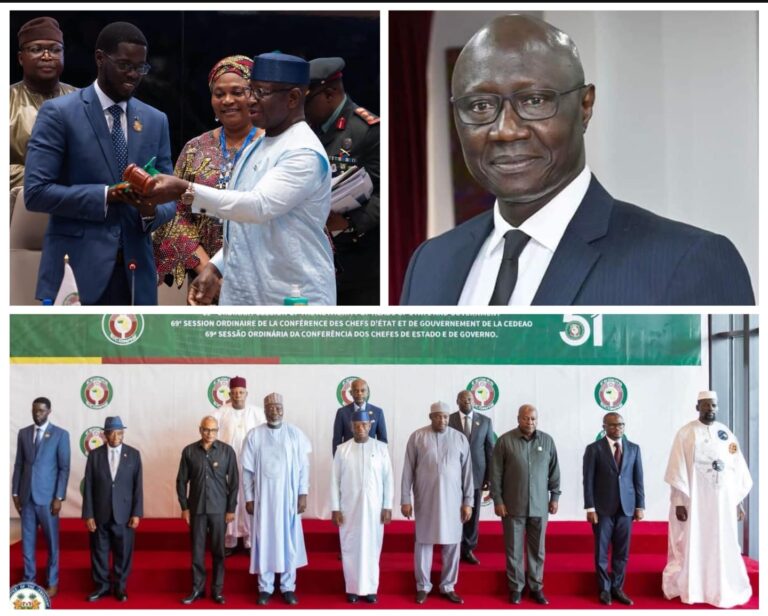
The regional leaders at their 69th Ordinary Summit appointed Gen. Birame Diop (rtd), Senegal’s former Minister of the Armed Forces and ex-Military Adviser for United Nations Peace Operations, as President of the ECOWAS Commission for the 2026-2030 term. Senegal’s President Bassirou Diomaye Faye was elected the new Chair of the ECOWAS Authority of Heads of State and Government for a one-year term. The Commission coordinates the administrative activities of regional institutions and Specialized Agencies of the 51-year-old organisation, while the Chairman of the Authority provides policy guidance.

Diop replaces Gambia’s Dr Omar Alieu Touray, whose four-year term has been rather bumpy, with myriad leadership and governance challenges, It also saw the withdrawal in January 2005 of three Member States – Mali, Burkina Faso and Niger – which formed the Alliance of Sahel States, AES. The three are ruled by military juntas, and Guinea-Bissau, the fourth Member State under an army dictatorship, is suspended, leaving ECOWAS with 11 active Member States out of 15.

As if the responsibilities piled on Senegal were not enough, the Freetown Summit also appointed the country as the “facilitator” “…to support dialogue efforts towards an inclusive and smooth transition to constitutional order” in Guinea-Bissau.

In the former Portuguese colony, notorious for political instability, ex-President Umaro Sissoco Embaló orchestrated a self-coup in November 2025 to avoid an electoral defeat and is ‘remote-controlling’ the junta regime populated by his allies.

Faye succeeds Sierra Leone’s President Julius Maada Bio as ECOWAS Chairman. From all indications, Bio supports Embaló and had wanted another term as ECOWAS chair, but apparently, his performance and that of the Commission under Touray have raised several unanswered leadership questions.

Many had expected ECOWAS to insist on the release of the results of the 23 November 2025 elections, which were ready for announcement before the Embaló coup of 26 November. Instead, the Freetown Summit, “…takes note of the efforts underway in Guinea-Bissau to conclude the country’s political transition through a constitutional referendum slated for 30 August 2026 and the holding of general elections scheduled for 6 December 2026.”

Continuing, “The Authority calls on the transition authorities to ensure strict respect for human rights, fundamental freedoms, and judicial safeguards for all citizens of Guinea-Bissau, including those being prosecuted or accused in connection with events that took place under the previous regime. It further urges the authorities to unconditionally release all political figures still in detention, including the opposition PAIGC leader, as a goodwill gesture to engender a more favourable climate for inclusive engagements, reassure the opposition, and bolster the credibility of the transition process.”

This is despite the demand by Guinea-Bissau opposition parties, which have called ECOWAS’ attention to the fact that the junta’s transition programme “is a sham.” They also reminded ECOWAS leaders of their decision at the Abuja Summit on December 14, 2025, calling for a civilian-led transition “with a civilian President and a civilian Prime Minister (to head) an inclusive government that reflects the political spectrum of Guinean society, (and) responsible for carrying out the necessary structural reforms (to) organize free, fair, and transparent elections on a new date to be defined by consensus.”

By appointing Senegal as Chief Mediator of the Guinea-Bissau crisis, ECOWAS leaders can be accused of taking sides with the Bissau junta.  Faye has never hidden his support for Embaló. After the November 2025 coup, the Senegalese leader dispatched a plane to Bissau to evacuate Embaló, who only left Senegal unceremoniously due to opposition by then-Prime Minister Ousmane Sonko, Faye’s former friend-turned political foe.

It is therefore unlikely that the Guinea-Bissau crisis would be resolved by Faye given his and, by extension, ECOWAS’ perceived bias. Apart from  Faye’s domestic political battle with Sonko, the added regional assignment can only complicate Faye’s role as ECOWAS Chairman with ramifications for future elections and political governance, not just in Guinea-Bissau and Senegal but the ECOWAS region at large.

ECOWAS has a Stabilization Support Mission in Guinea-Bissau (ESSMGB), which, along with a similar Mission in the Gambia, operates more like Palace guards for regime protection, due to their dubious mandates, which the Commission is trying to review. ECOWAS is owing the Missions’ troop-contributing countries more than US$120 million, and counting.

Analysts had expected a strong ECOWAS statement in Freetown barring Embaló and officials of the military junta from future elections in Guinea-Bissau in line with the 2001 regional Supplementary Protocol on Democracy and Good Governance. But having failed to apply its own rules in Guinea, where a coup leader has conducted an election and won, ECOWAS has put itself in a quandary.

The ECOWAS Authority “…congratulates H.E. Mamadi Doumbouya, on his election as the President of the Republic of Guinea,“ said the Communiqué of the Freetown Summit.

Togo and Benin are among member States that have violated the same 2001 Protocol by organising questionable elections in recent years without consequences.

Meanwhile, the Freetown Summit approved the appointment of new Commissioners to replace the Touray-led Commission and the leadership of other Community Institutions from 1 September 2026.

The new Commissioners are: Political Affairs, Peace and Security: Mrs Francess Piagie Alghali (Sierra Leone); Economic Affairs and Agriculture: Mr Dehpue Yenpea Zuo (Liberia); Internal Services: Dr Kalilou Sylla (Côte d’Ivoire); Infrastructure, Energy and Digitalisation: Mr Amin Amidu Suleiman (Ghana); and Human Development and Social Affairs: Prof. Nassirou Bako-Arifari (Benin). Nigeria was given additional time to name a candidate for the Commission’s Vice-President position.

The Director General, West African Health Organisation (WAHO) is Dr Palokinam T. Pitche (Togo); Director General, Inter-Governmental Action Group against Money Laundering in West Africa (GIABA): Mr Mam Cherno Jallow (The Gambia); while Auditor General for ECOWAS Institutions is Ms Carla Maria Borges Bettencourt (Cabo Verde).

The Authority also named five new judges for the ECOWAS Community Court of Justice from Nigeria, Togo, Benin, Liberia and the Gambia for 2026-2030, to replace those whose terms have ended.

A major economic decision by the Freetown Summit is the regional leaders’ “firm commitment to launch the ECO (regional currency) in 2027 as a key instrument for deepening regional economic integration and promoting sustainable, inclusive and resilient growth within the Community.”

The programme has been delayed for more than a decade. According to the final communique, “…the launch of the ECO shall commence with those countries that meet the established convergence criteria and are ready to participate. At the same time, appropriate support will be provided to countries that are not yet ready, with a view to facilitating their subsequent accession to the single currency.”

ECOWAS leaders also adopted the Declaration of Commitment to the Compact on the Future of Regional Integration “…there by reinforcing their collective resolve to consolidate regional unity, secure lasting peace, and accelerate shared, sustainable development across the ECOWAS and West African Community.”

The Authority also welcomed the signing of the Inter-Governmental Agreement on the African Atlantic Gas Pipeline (AAGP), reaffirming support for the project, involving ECOWAS countries, notably Nigeria, and Morocco.

The Authority expressed “deep concern over the continued deterioration of the security situation across the region, particularly in the Sahel and the Lake Chad Basin, characterized by attacks, kidnapping, and disruptive operations by Terrorist Armed Groups (TAGs), insurgents, and bandits on communities and security forces, causing the loss of lives, destruction of property, and mass displacements.” It urged member States to settle their arrears of Community Levy and also “pledge capabilities” for the activation of the regional Force on counter-terrorism.

The mandates of Amb. Baba Kamara, the ECOWAS Special Envoy on Counter-terrorism and Chief Negotiator with the AES countries, Dr Lansana Kouyaté, were renewed for three years, and until December 2026, respectively.

The Authority thanked China for building and donating the ECOWAS new Headquarters building in Abuja.

Take nothing away from the achievements of ECOWAS as the best-performing among Africa’s eight Regional Economic Communities (RECs). Still, the realisation of most of the Freetown Summit goals will depend largely on the quality of leadership at the Commission, Community Institutions, and at the national level.

It remains to be seen what Faye, as Chair of the ECOWAS Authority and Gen. Diop, his compatriot from the nation of Teranga Lions, as President of the Commission, will bring to halt the dangerous leadership and reputational slide at the Abuja-based regional body.

Nigeria must step up to the table to lead the rescue mission before it is too late.

Ejime Is A Global Affairs Analyst And Consultant On Peace & Security And Governance Communication
Outrage in Enugu As Woman Is Paraded For Allegedly Force-Feeding Faeces To Her Niece

0

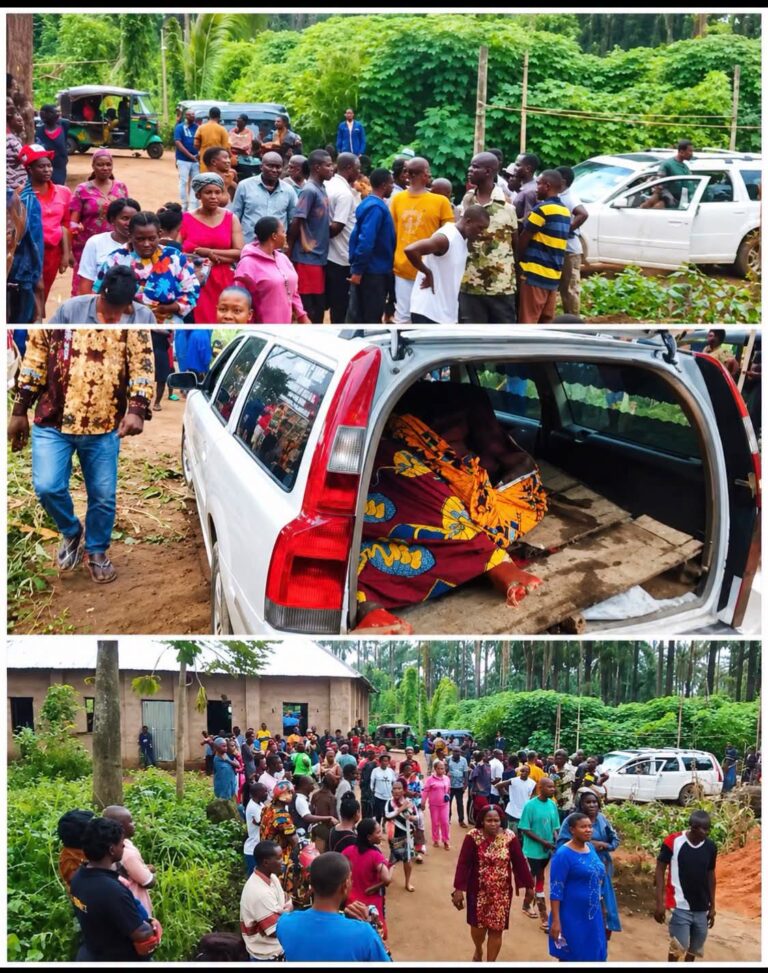
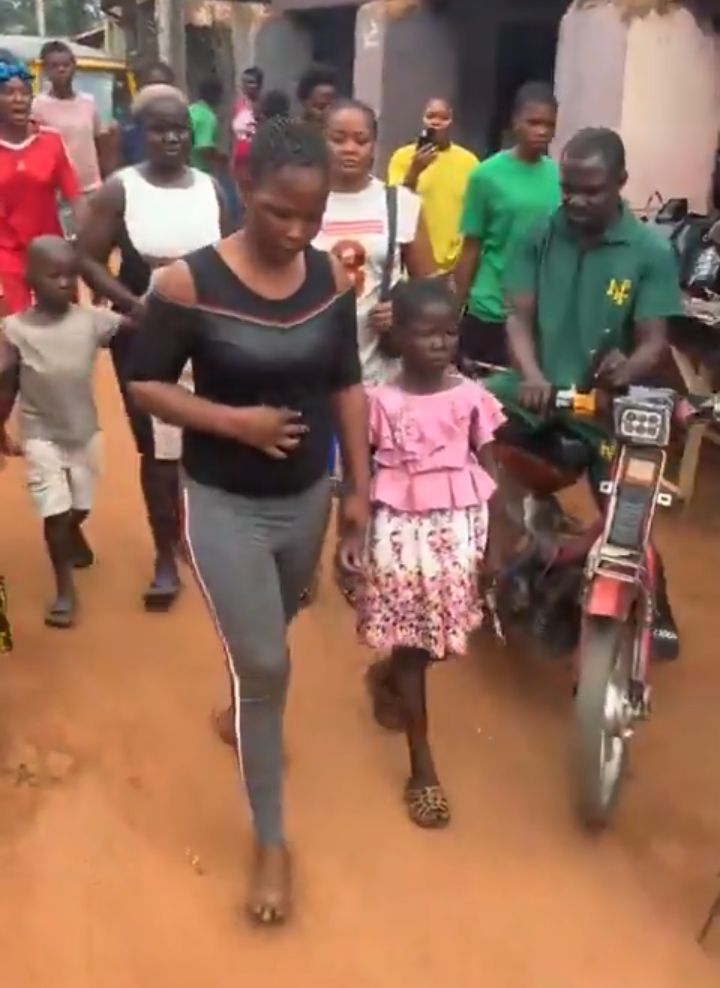
Tension gripped Ugwuoba community in Enugu State after residents paraded a woman accused of forcing human faeces into the mouth of a child in her care.

In a video circulating online, a crowd of women marched the suspect through the streets, denouncing her actions as wicked and inhuman.

The child has been identified as the woman’s niece, according to eyewitnesses.

The incident has triggered widespread condemnation online and renewed calls for authorities to strengthen child protection and welfare enforcement in the state.

BREAKING: US Signs 30-Year Nuclear Cooperation Agreement With Saudi Arabia

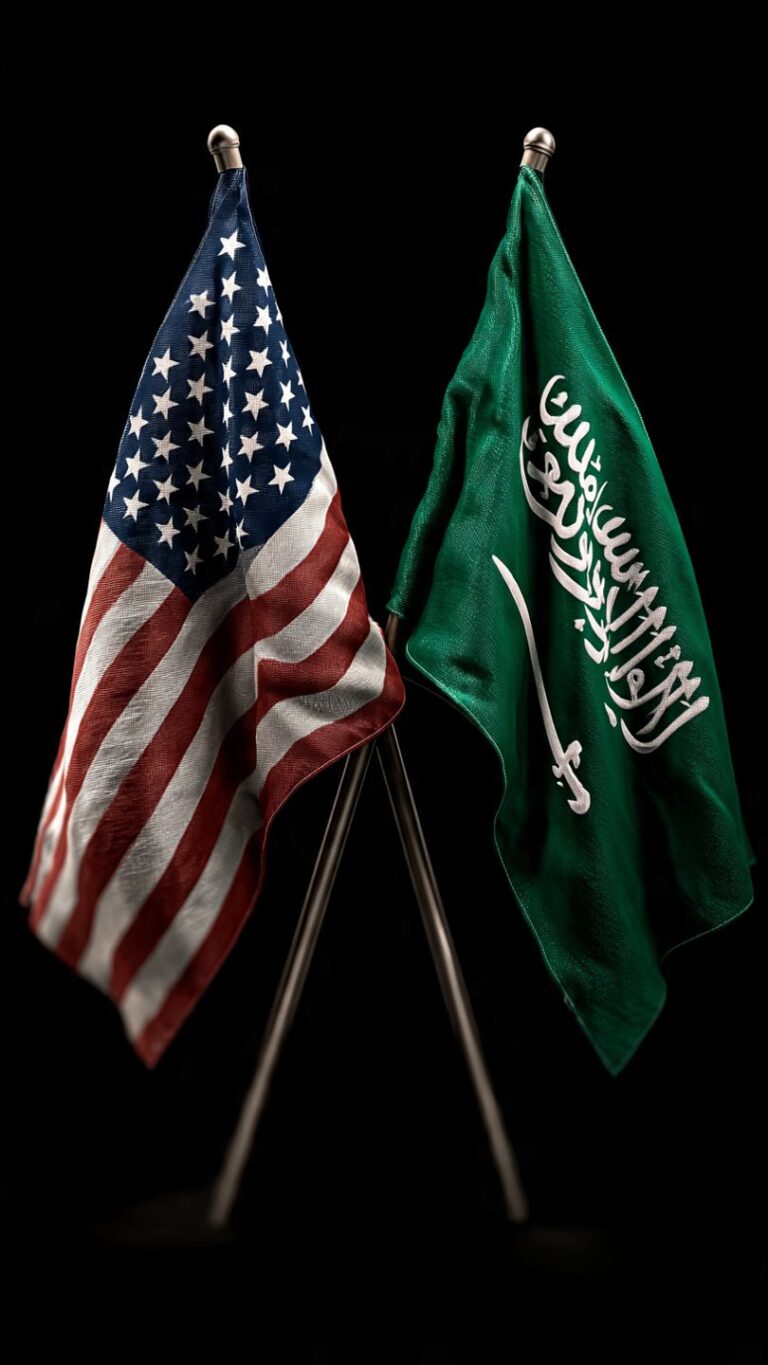
The United States has signed a 30-year nuclear deal with Saudi Arabia, The Wall Street Journal reports.

The agreement could enable Saudi Arabia to develop domestic nuclear enrichment capabilities as part of its broader energy strategy, marking one of the most significant nuclear partnerships between the two countries to date.

Source: The Wall Street Journal